


Introduction
As Japanese manga continues to attract strong attention both domestically and internationally, we conducted two nationwide surveys — one with 1,000 respondents across Japan and a follow-up with 100 manga creators — to examine how readers and professionals view the growing influence of AI and the expansion of Western live-action adaptations.
These findings help clarify how manga is evolving amid new creative tools and global adaptations.
Key takeaways
AI
- 1
Two-thirds of Japanese say they do not want to read manga mostly created with AI.
- 2
41.7% believe AI may threaten the jobs of manga artists.
- 3
Nearly half (45%) believe AI is not better than humans at any creative manga task.
- 4
Only 8.5% say they would “definitely” read an AI-created manga.
- 5
More than half of Japanese people are still undecided about AI in manga. 52% select “Neutral,” showing that public opinion has not yet solidified.
- 6
Among those that do have an explicit opinion, negative sentiment outweighs positive sentiment. 28% are negative versus 20% positive — a clear lean toward caution.
- 7
Even among those who do trust AI, trust is limited to visual tasks. Only around 16–21% think AI might exceed humans in character design, backgrounds, or coloring.
- 8
Only around 15% believe AI could outperform humans in story structure or dialogue. Writing remains firmly seen as a human domain.
Creators (follow-up survey)
- 1
Despite public doubts, AI adoption among creators is already high, with 59% of professional creators in the survey using AI tools.
- 2
More than a third of creators report that AI “significantly” or “somewhat” boosts productivity, and 60% say it delivers clear efficiency gains in their workflow.
- 3
Creators most commonly use AI for character design and story brainstorming, with around 45–48% applying it in these early creative stages.
- 4
The main concerns among creators are skill decline and negative audience perception (both around 38–39%), reflecting fears of losing craft and reader trust.
Western adaptations
- 1
Almost half of Japanese respondents are unaware that Western live-action manga adaptations exist, with 44.5% answering “I didn’t know,” making unfamiliarity the largest group.
- 2
Nearly half of respondents (44.5%) say they have no concerns about Western adaptations, indicating a large share simply does not care either way.
- 3
Indifference is the dominant attitude toward Western adaptations, with 40% reporting a neutral stance that is neither supportive nor opposed.
- 4
Among those with an opinion, negative sentiment slightly outweighs positive sentiment toward Western adaptations (31% vs 28%), indicating modest skepticism.
- 5
Only around one in seven Japanese respondents have watched multiple Western adaptations, showing that regular viewers remain a small minority.
- 6
Among respondents who express concerns, cultural misrepresentation is the top issue at 27.9%, far exceeding worries about production quality or casting.
- 7
Recognition of Western manga adaptations is largely defined by ONE PIECE and Death Note, which dominate awareness among domestic viewers.
- 8
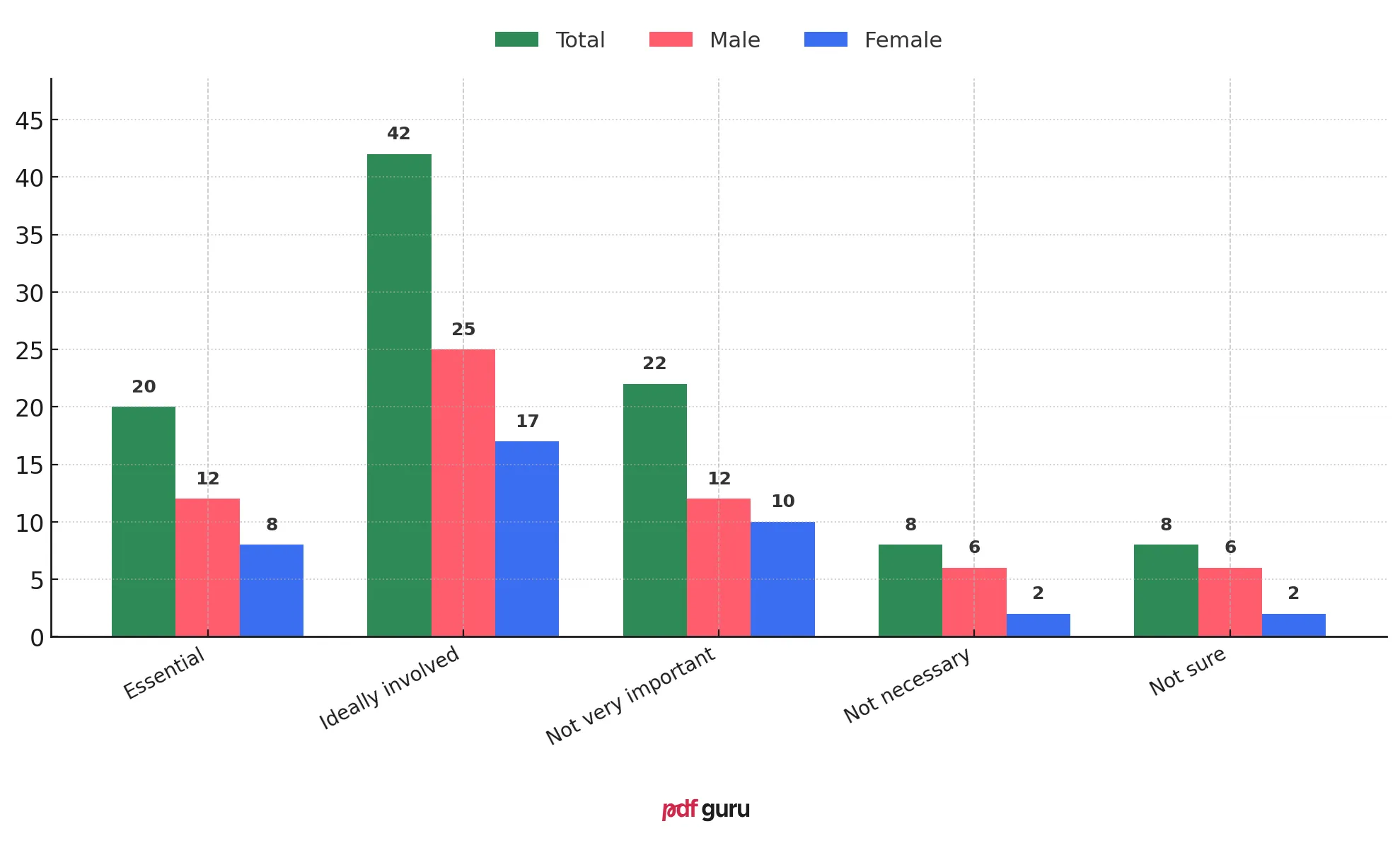
Creators strongly believe Japanese professionals should be involved in Western adaptations, with 62% saying such involvement is “essential” or “ideal,” reflecting a desire for cultural guardianship.
Methods
To examine how both readers and creators view the use of AI in manga production and the growing presence of Western live-action adaptations, two surveys were conducted via the Freeasy platform in November 2025.
The first survey, conducted on November 4, 2025, gathered responses from 1,000 people across Japan aged 15 to 99. This screening survey focused on general audience awareness, attitudes, and viewing or reading behavior related to AI-created manga and Western adaptations.
The second survey, conducted from November 13 to 15, 2025, targeted 100 manga creators identified from the initial sample. This follow-up explored their professional workflows, how and where they use AI tools, and their perspectives on overseas adaptations and the future of manga production.
Together, these surveys provide a detailed view of how everyday readers and industry professionals each approach AI, creativity, and cultural adaptation — highlighting areas of overlap as well as clear differences between public sentiment and professional practice.
Results
Screening survey
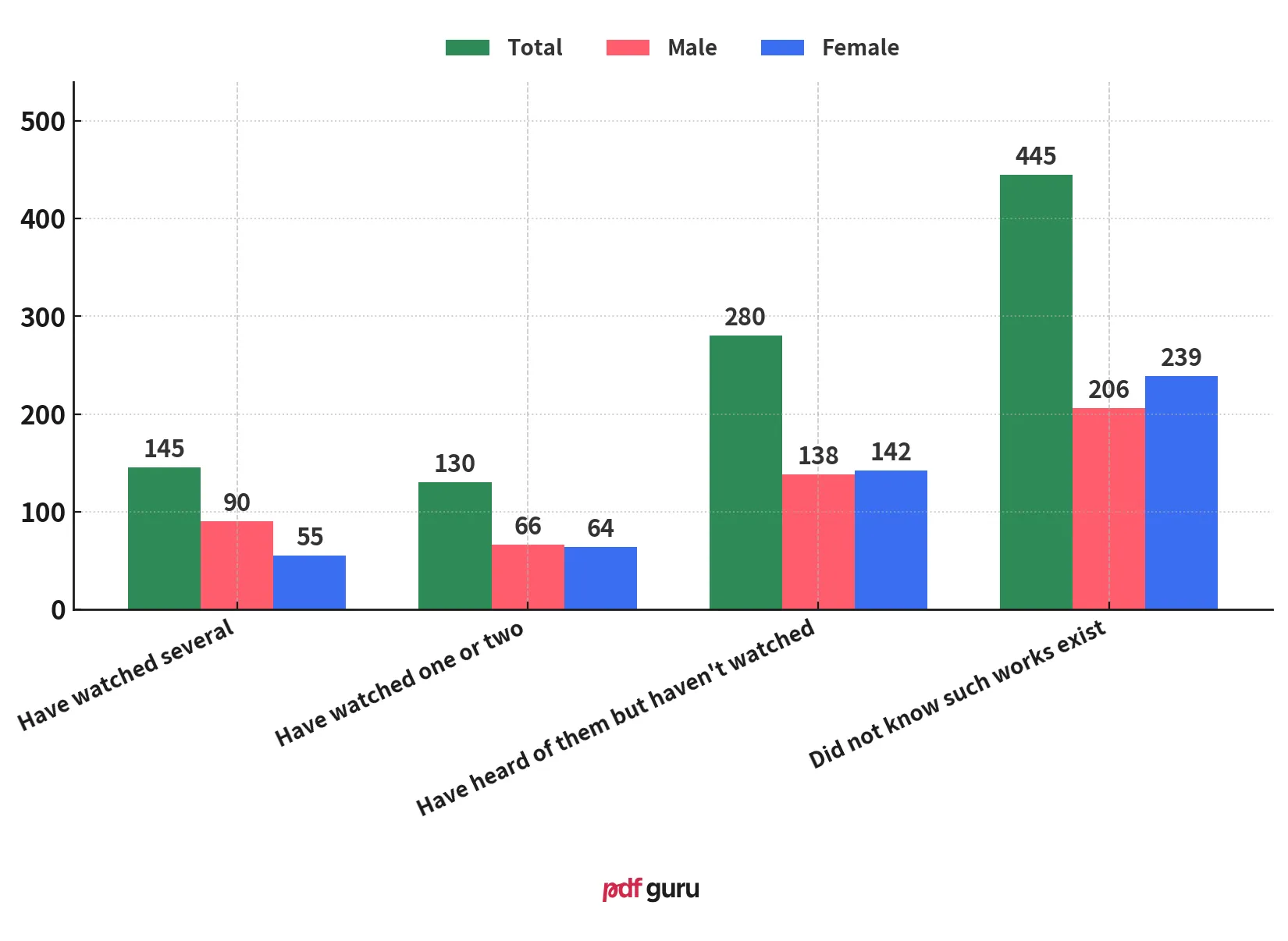
Q1 Have you ever watched a Western live-action adaptation (TV series or movie) based on a Japanese manga? (SA)
Sample: 500 men and 500 women
Awareness of Western live-action manga adaptations is generally low. The largest group — 44.5% of respondents — did not know these adaptations even exist. Another 28% have heard of them but never watched any, while only around 14–15% have watched one or more titles. Overall, unfamiliarity clearly outweighs actual viewing.
There are two meaningful gender differences. Men are more likely to have watched several adaptations, while women are more likely to be completely unaware that Western versions exist. For the other categories (“watched one or two” and “heard but not watched”), men and women show similar levels.
Most respondents are unfamiliar with Western live-action manga adaptations, and only a small minority have actually watched them.
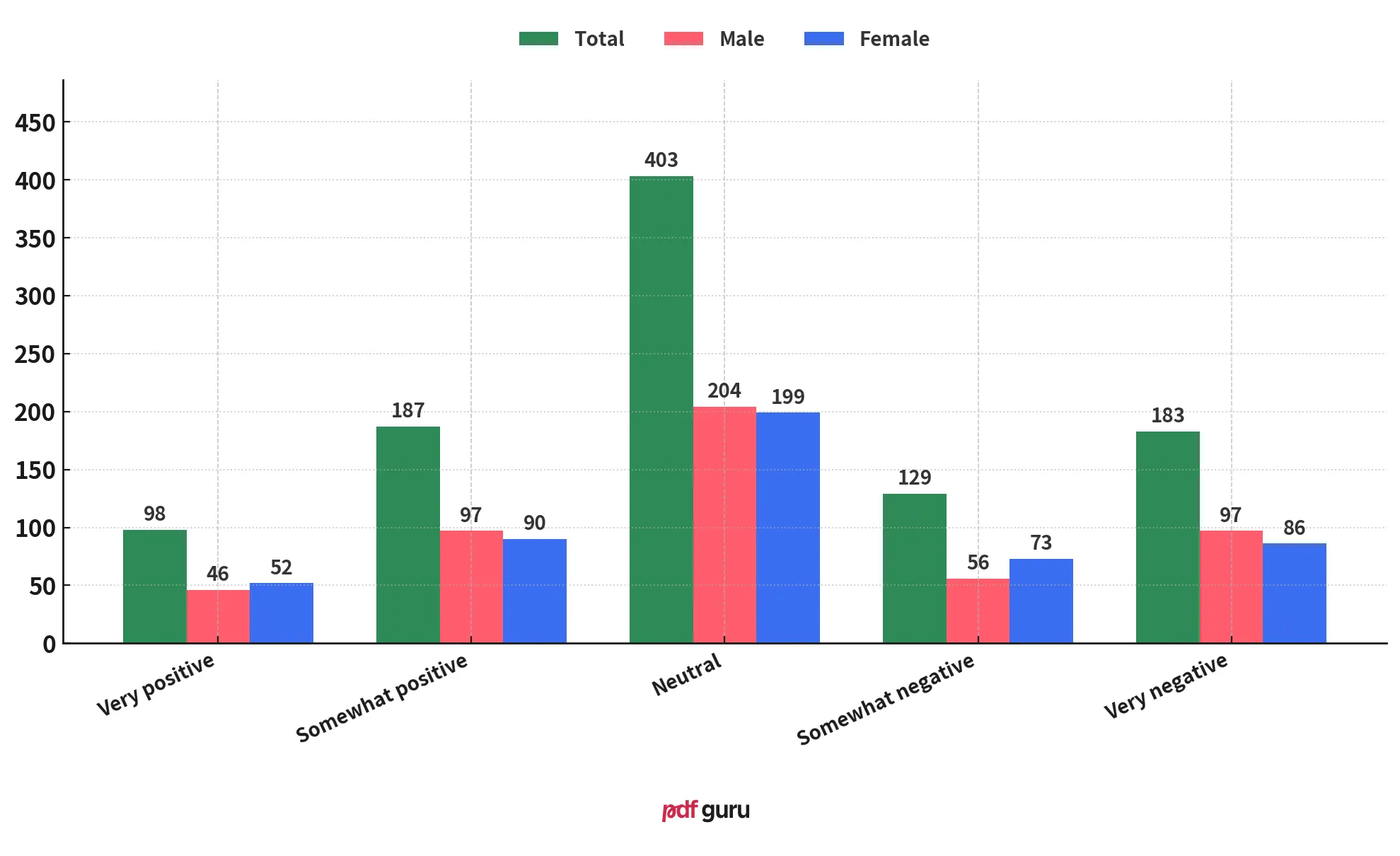
Q2 How do you generally feel about Western live-action adaptations of Japanese manga? (SA)
Sample: 500 men and 500 women
Attitudes toward Western live-action adaptations of Japanese manga are mixed but generally moderate. The largest group is neutral (40.3%), while positive (28.5%) and negative (31.2%) views sit fairly close to each other on either side. Strong opinions exist, but most respondents fall somewhere in the middle rather than at the extremes.
Q3 Which Western live-action adaptations based on Japanese manga have you watched? (MA)
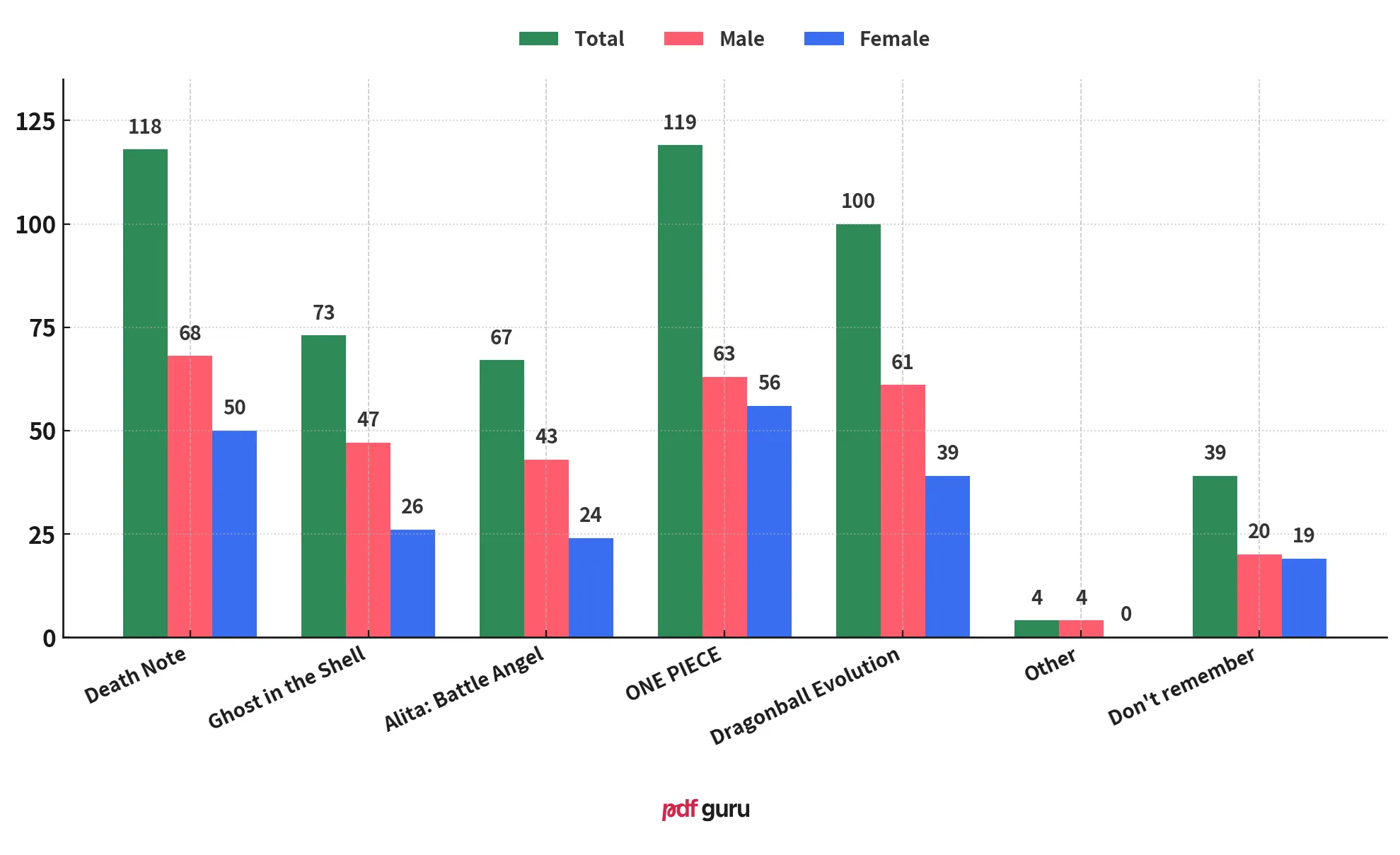
Sample: 156 men and 119 women
(This question was asked only to those who had watched at least one Western adaptation.)
Among viewers of Western live-action manga adaptations, interest is concentrated in just a few well-known titles. ONE PIECE (43.3%) and Death Note (42.9%) are the most commonly watched, followed by Dragonball Evolution (36.4%). Ghost in the Shell (26.6%) and Alita: Battle Angel (24.4%) are watched by about a quarter of respondents. Only a very small share selected “Other,” and around 14% said they don’t remember which titles they watched. Overall, most viewers are familiar with the same small group of high-profile adaptations.
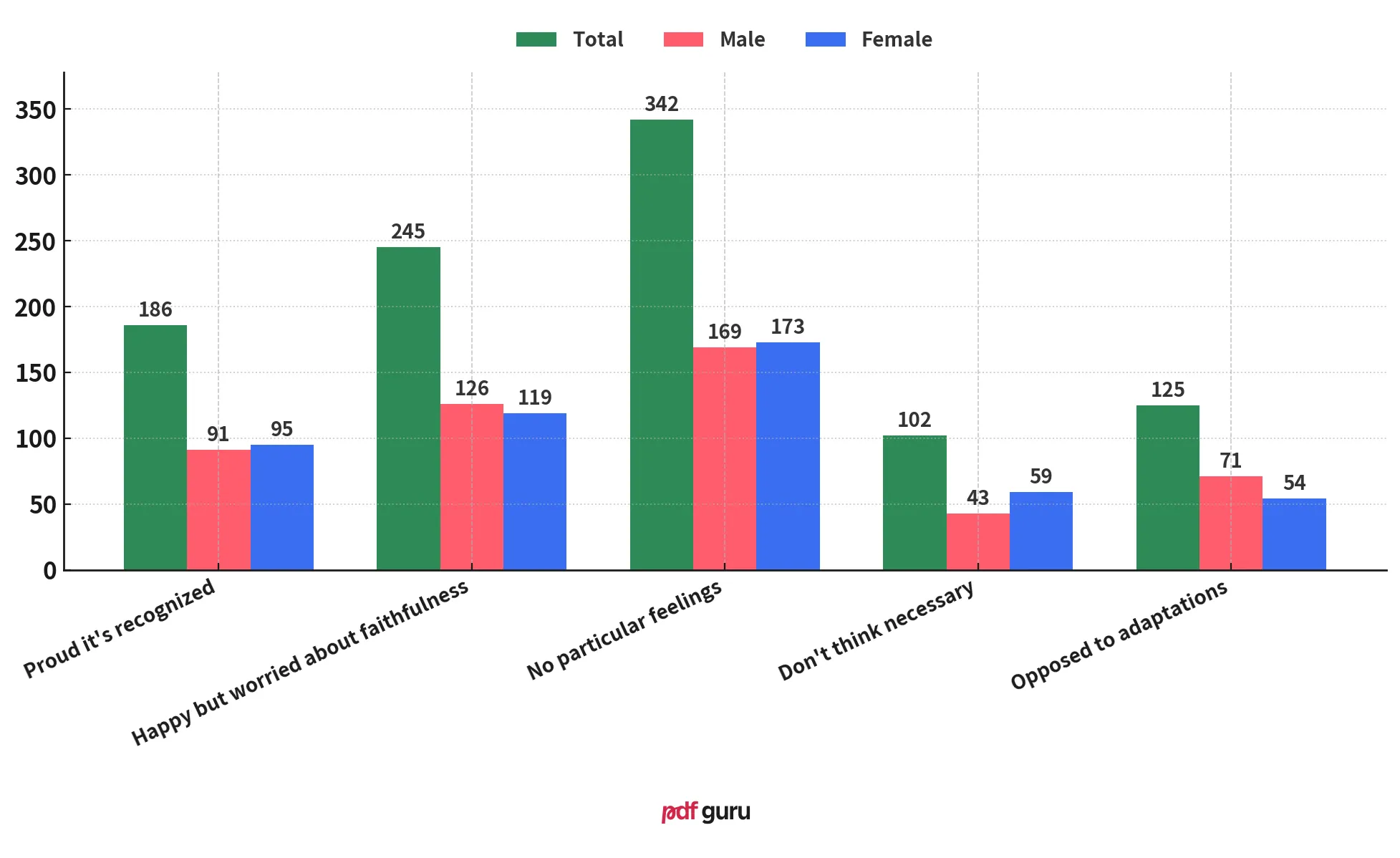
Q4 How do you feel about Japanese manga being adapted for Western audiences? Please select the option closest to your opinion. (SA)
Sample: 500 men and 500 women
Opinions on Japanese manga being adapted for Western audiences are moderate and largely indifferent. The largest group (34.2%) says they have “no particular feelings,” and another 24.5% are “happy but concerned about faithfulness to the original.” Together, nearly 60% express neutral or cautiously positive views rather than strong enthusiasm or strong opposition.
Clear enthusiasm is limited: 18.6% feel proud that Japanese content is being recognized abroad. Negative views are also present but not dominant, with 10.2% saying Western adaptations are unnecessary and 12.5% opposed. Overall, most respondents show mild or conditional acceptance rather than firm support or resistance.
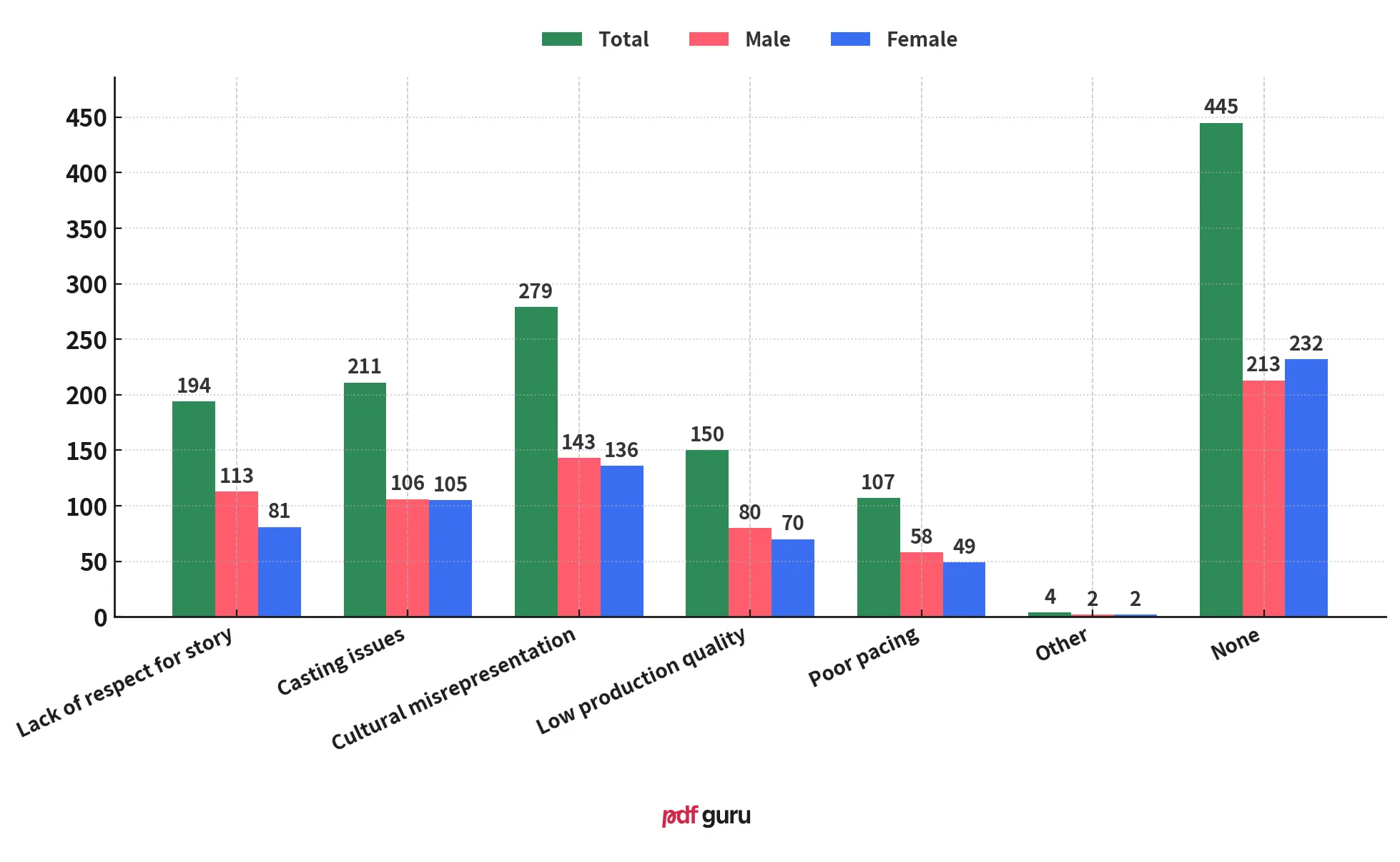
Q5 What concerns do you have about Western live-action manga adaptations? (MA)
Sample: 500 men and 500 women
(This was a multiple-answer question; respondents could choose more than one concern.)
Nearly half of respondents (44.5%) say they have no particular concerns about Western live-action manga adaptations. Among those who do have concerns, the most common is “cultural misunderstandings or misrepresentation” (27.9%), followed by casting issues (21.1%) and worries about a lack of respect for the original story (19.4%). Production quality (15.0%) and pacing or structure (10.7%) are less frequently mentioned. Overall, people who do feel concerned tend to focus more on cultural accuracy than on technical aspects of filmmaking.
There is one notable gender difference: men are more likely than women to worry about whether Western adaptations properly respect the original story. For other concerns, men and women answer similarly.
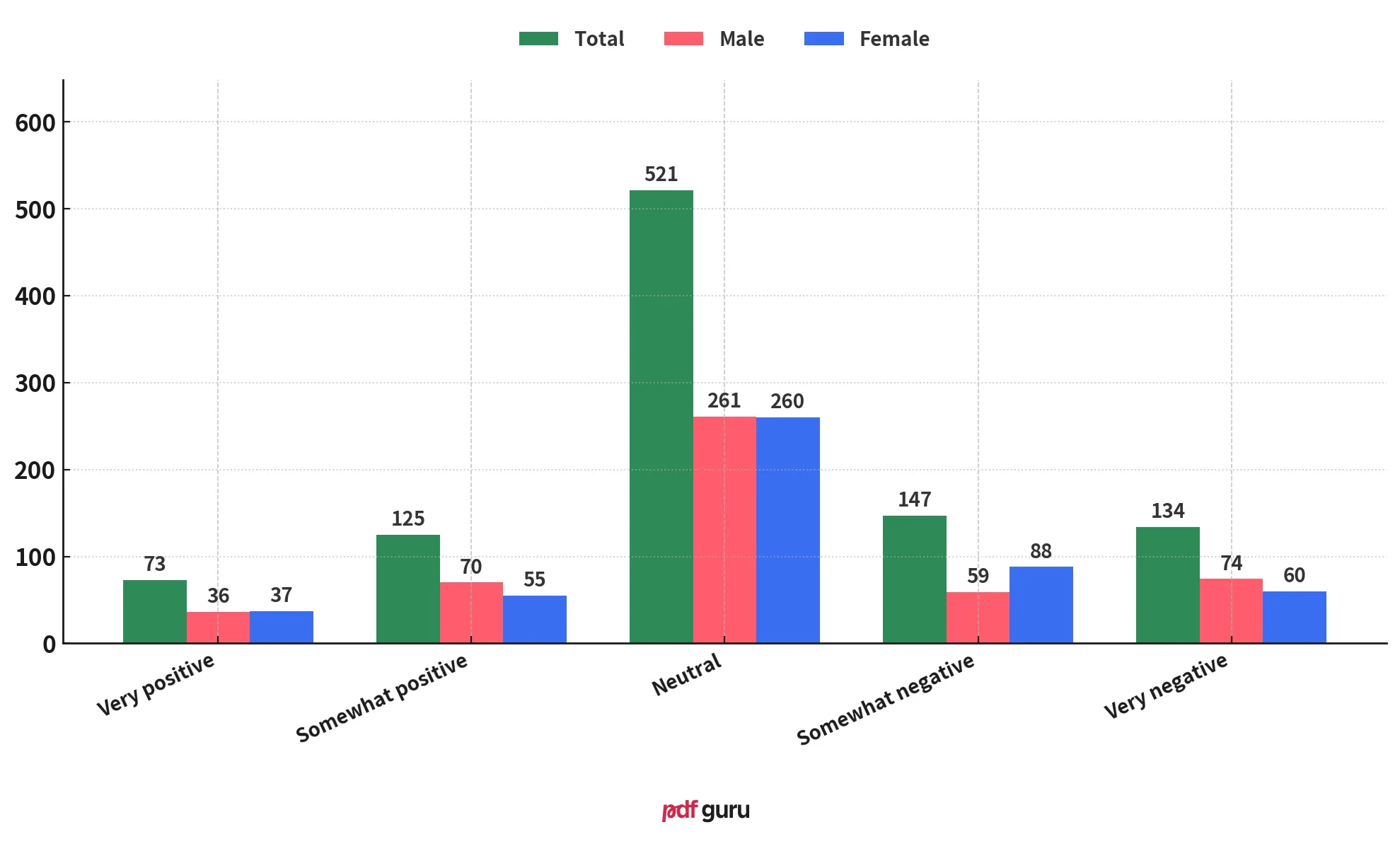
Q6 What is your opinion on the use of AI in manga production? (SA)
Sample: 500 men and 500 women
Views on the use of AI in manga production are dominated by neutrality. Just over half of respondents (52.1%) chose “Neutral,” showing that many people have not yet formed a clear opinion on AI in this context. Among those who do have a stance, negative views (28.1%) are somewhat more common than positive ones (19.8%), indicating a slight lean toward caution rather than enthusiasm.
There is one notable gender difference: women are more likely than men to hold a mildly negative view of AI in manga production. In all other response categories, men and women answer similarly.
Overall, most respondents are unsure about AI in manga production, with those who do take a position leaning more toward concern than optimism.
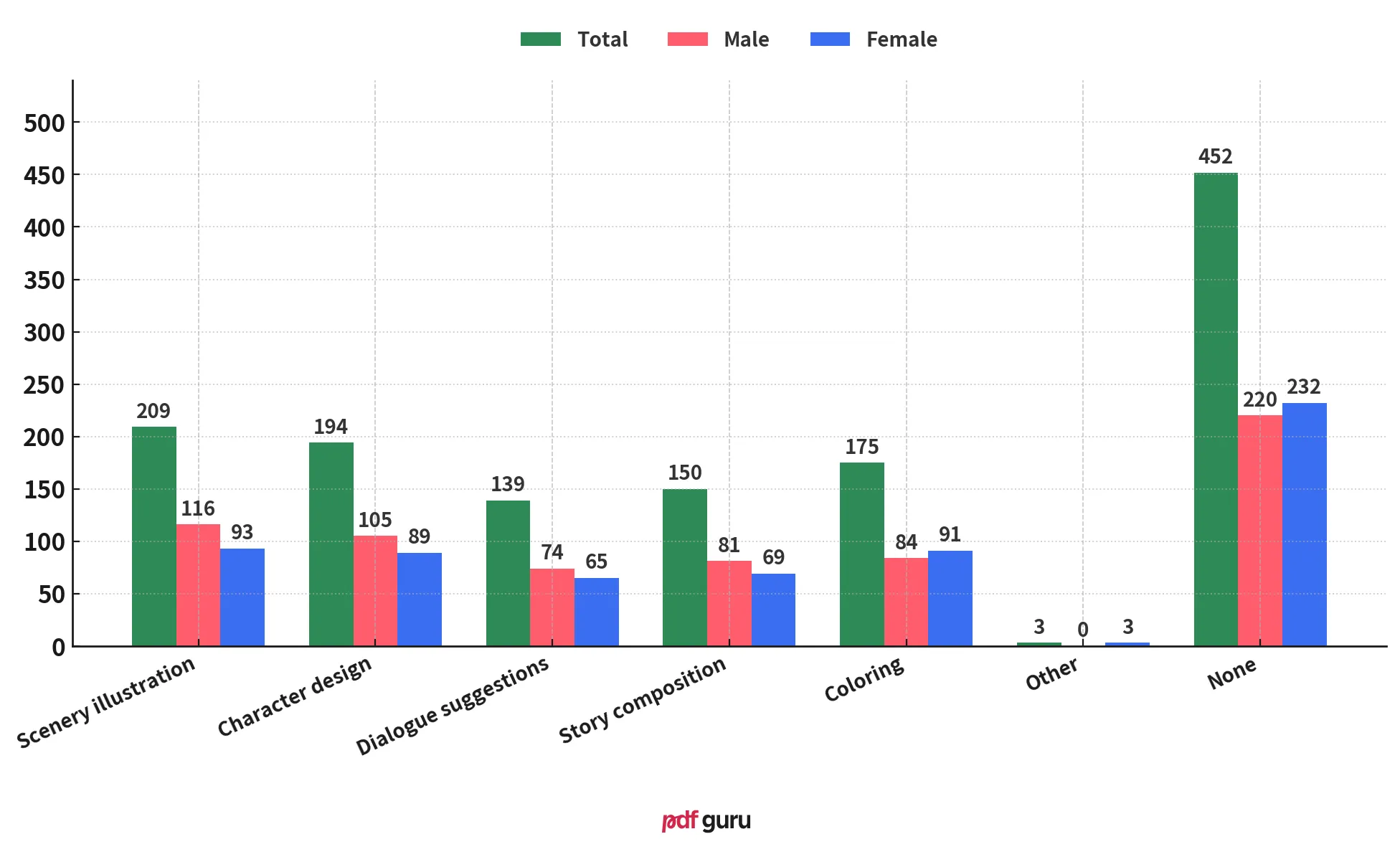
Q7 Which creative tasks do you think AI can perform better than humans? (MA)
Sample: 500 men and 500 women
(This was a multiple-answer question; respondents could choose more than one task.)
Nearly half of respondents (45.2%) believe there is no creative task where AI outperforms humans. This indicates a strong level of skepticism about AI’s ability to surpass human creativity in manga production.
Among those who do see potential strengths, the percentages are fairly similar across tasks. Visual tasks are viewed as the most likely areas where AI could excel: scenery illustration (20.9%), character design (19.4%), and coloring (17.5%). Fewer respondents think AI could outperform humans in story composition (15.0%) or dialogue (13.9%). Overall, only a minority believes AI has an advantage in any specific creative role.
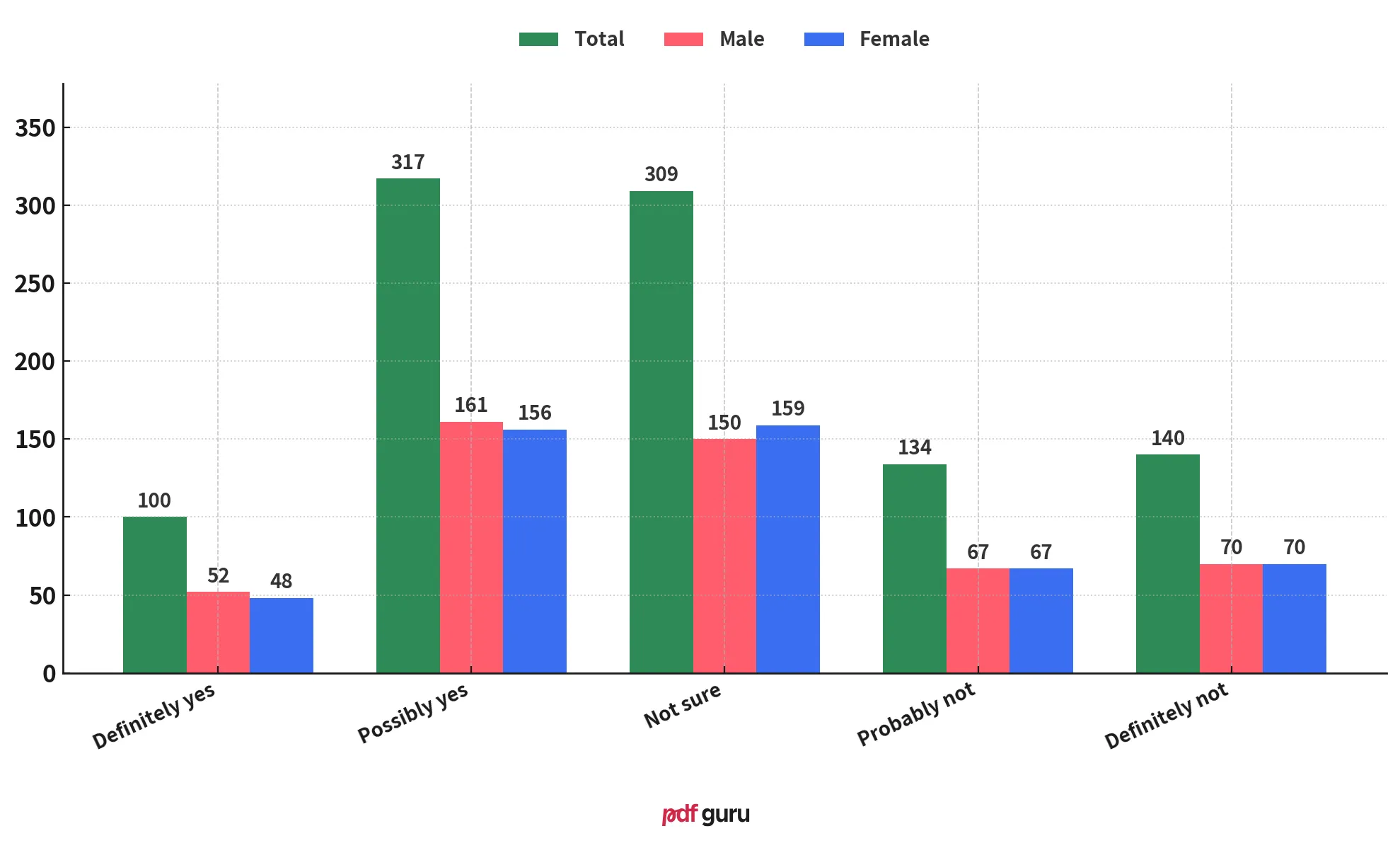
Q8 Do you think the advancement of AI will threaten the work of manga artists? (SA)
Sample: 500 men and 500 women
Views on whether AI will threaten the work of manga artists are divided, but concern and uncertainty outweigh confidence. A combined 41.7% believe a threat is definite or possible, while another 30.9% are unsure. By contrast, just over a quarter (27.4%) do not expect AI to threaten artists’ jobs. Overall, respondents tend to lean toward worry or indecision rather than optimism.
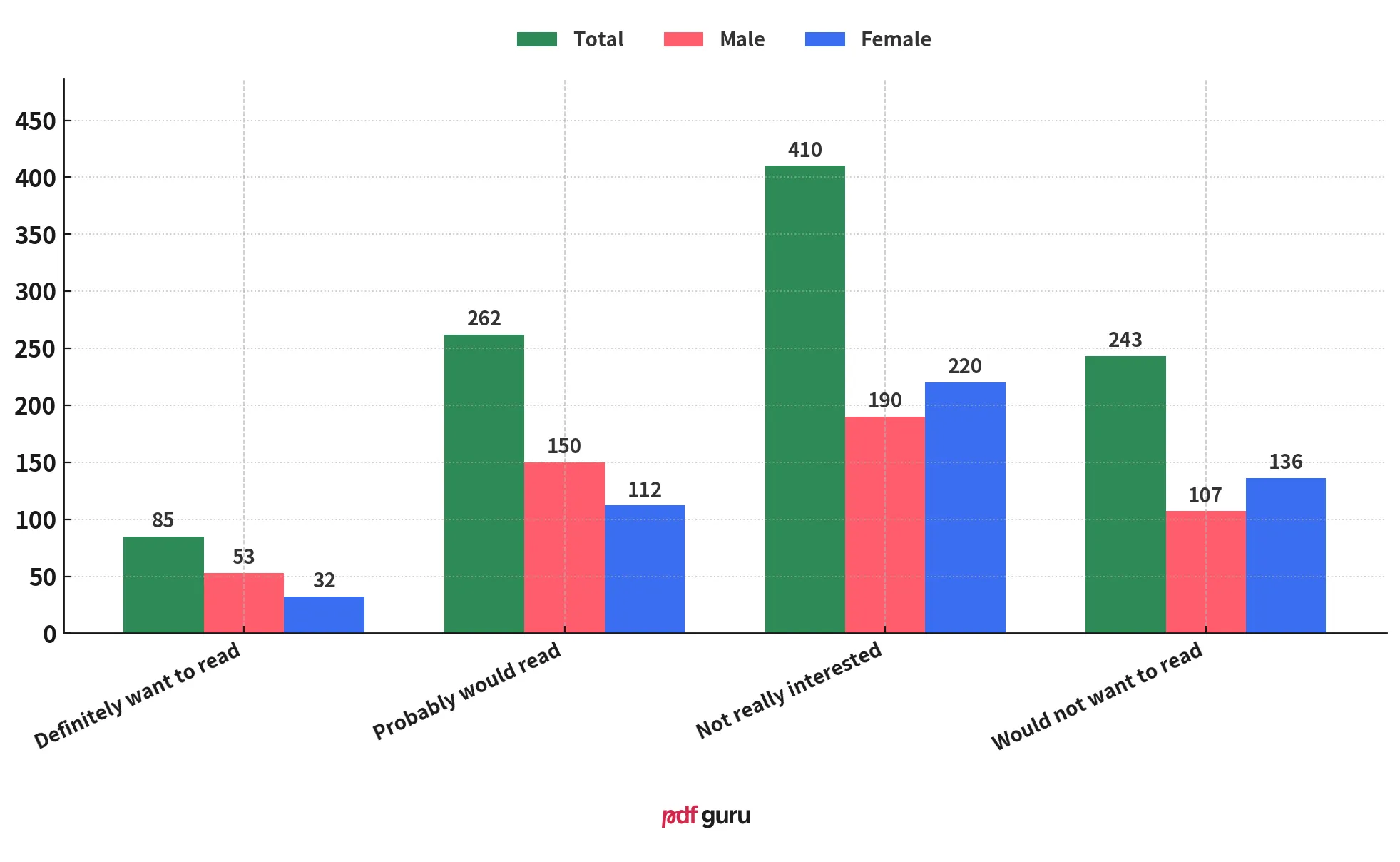
Q9 If you knew a manga was mostly created using AI, would you still want to read it? (SA)
Sample: 500 men and 500 women
Interest in reading manga mostly created using AI is generally low. Only 8.5% say they would definitely read it, and 26.2% say they probably would, meaning about one-third of respondents are open to the idea. The majority, however, lean negative: 41.0% are “not really interested,” and another 24.3% say they “would not want to read it.” In total, 65.3% express reluctance or rejection.
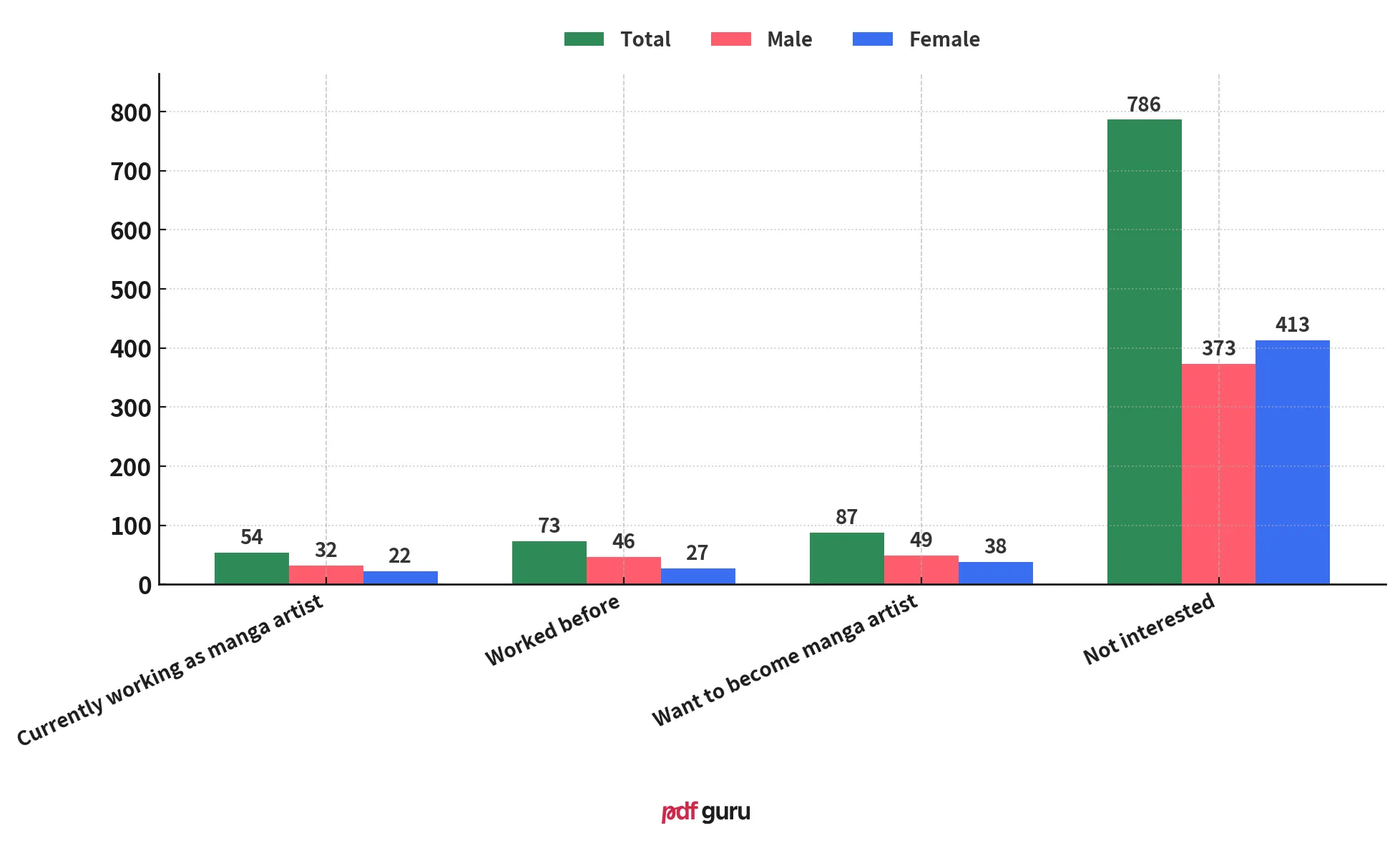
Q10 Have you ever worked in manga production, or do you aspire to become a manga artist in the future? (SA)
Sample: 500 men and 500 women
Only a small minority of respondents are directly involved in manga creation or considering it as a career. Just 5.4% are currently working as manga artists, 7.3% have worked in manga production before, and 8.7% hope to become manga artists in the future. Altogether, about one in five respondents has some level of involvement or aspiration, while the vast majority (78.6%) relate to manga purely as readers rather than creators.
There are two notable gender differences. Men are more likely to have past experience in manga production, while women are more likely to say they have no interest in working in the field. Current activity and future aspirations, however, are similar across genders.
Follow-up survey
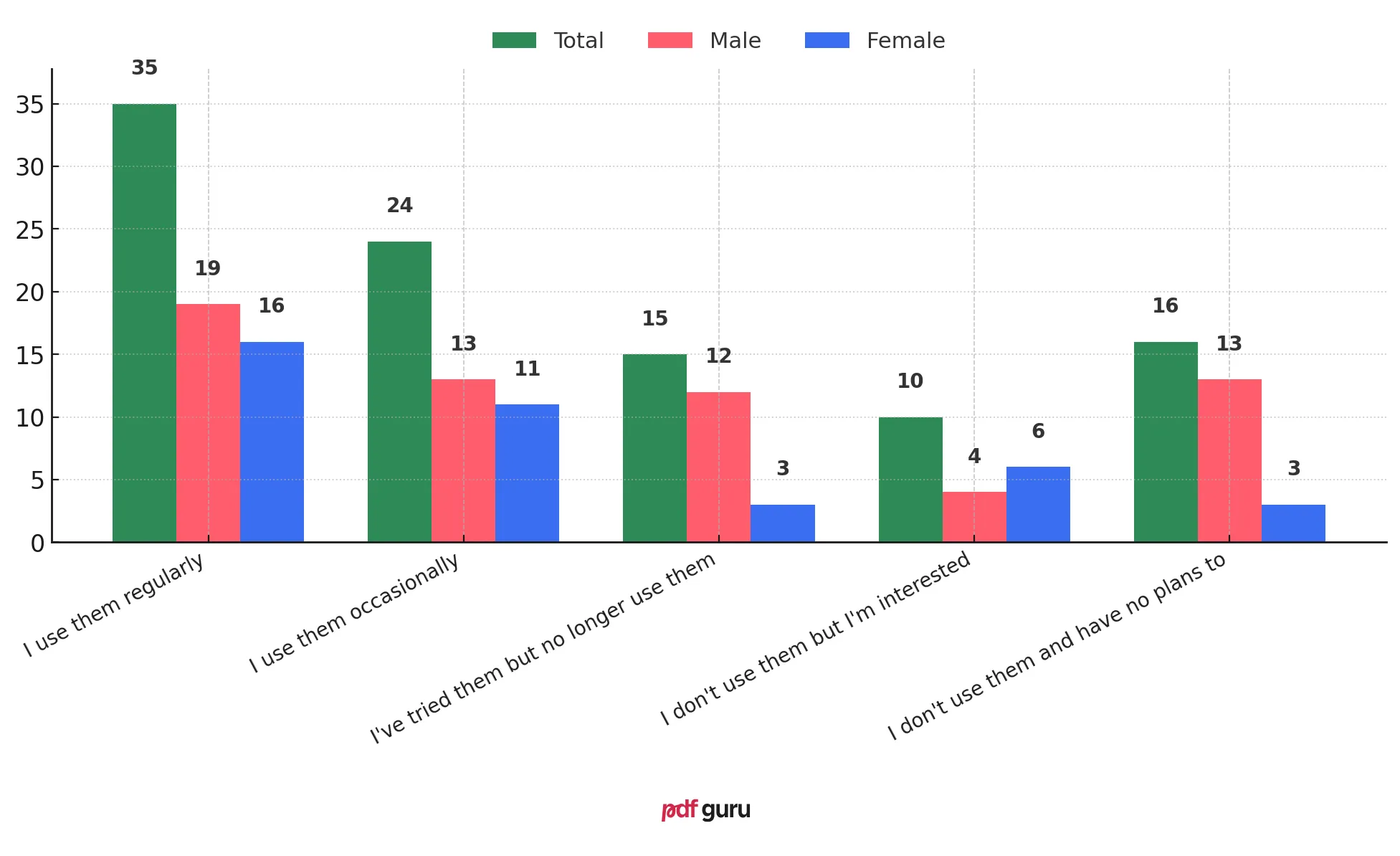
Q1 For those who answered in a previous survey that “I am currently working in manga production” or “I have worked in manga production in the past,” please answer the following question. Do you currently use AI tools in your manga creation process? (SA)
Sample: 61 men and 39 women
(Asked only to respondents who had worked in manga production.)
AI adoption is already widespread among manga creators. In total, 59% use AI tools in their production process, either regularly or occasionally. Only a small share (16%) say they do not use AI and have no plans to adopt it, indicating that resistance among professionals is relatively low.
Q2 In which parts of the manga creation process do you use AI? (MA)
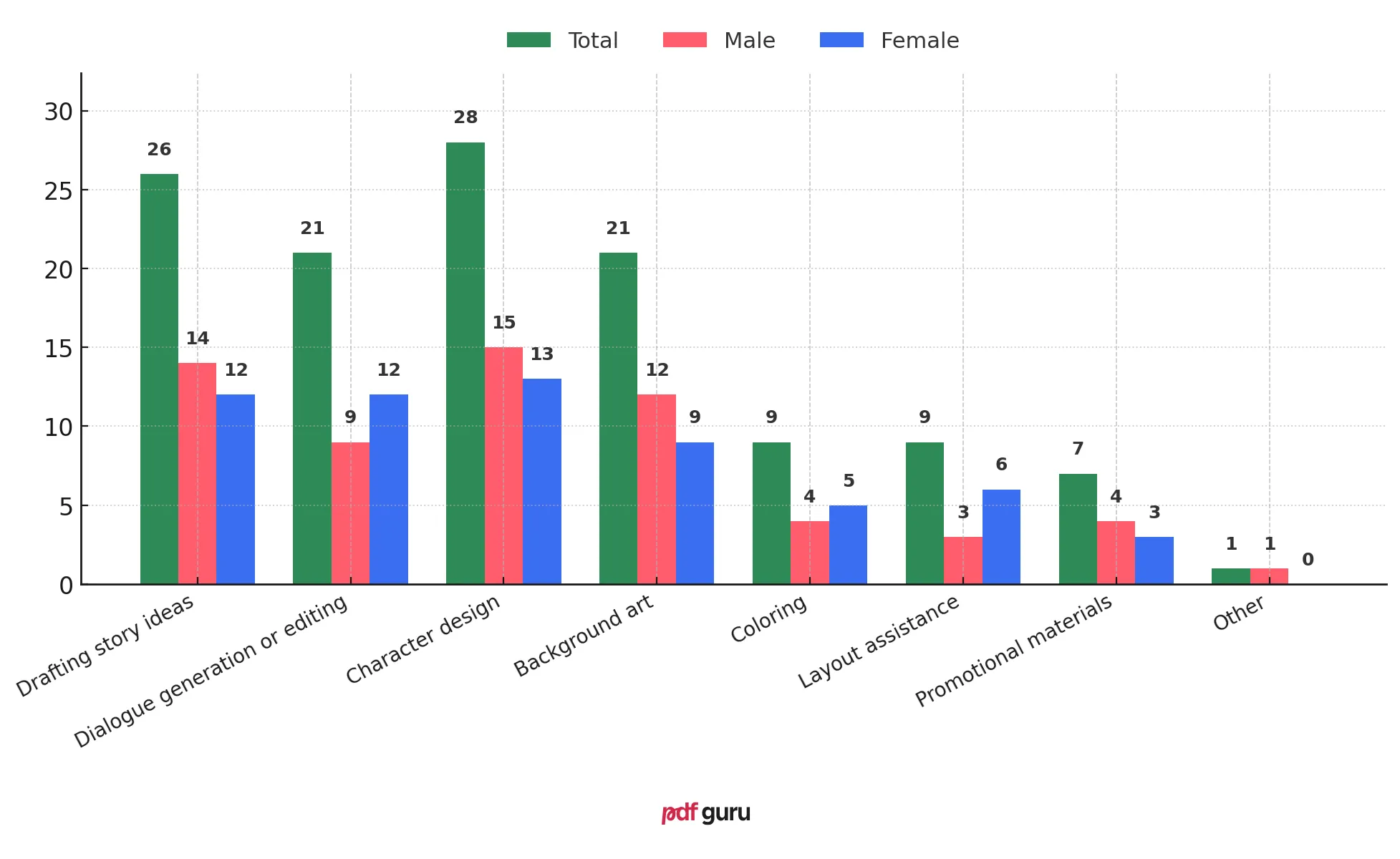
Sample: 32 men and 27 women
(Asked only to creators who reported using AI.)
Among creators who use AI, the tools are applied across a wide range of tasks. The most common uses are character design (47.5%) and drafting story ideas (44.1%), followed by dialogue generation and background art (both 35.6%). This shows that AI is being used both for early creative brainstorming and for labor-intensive visual work.
Q3 Which AI tools have you used in your manga creation work? (MA)
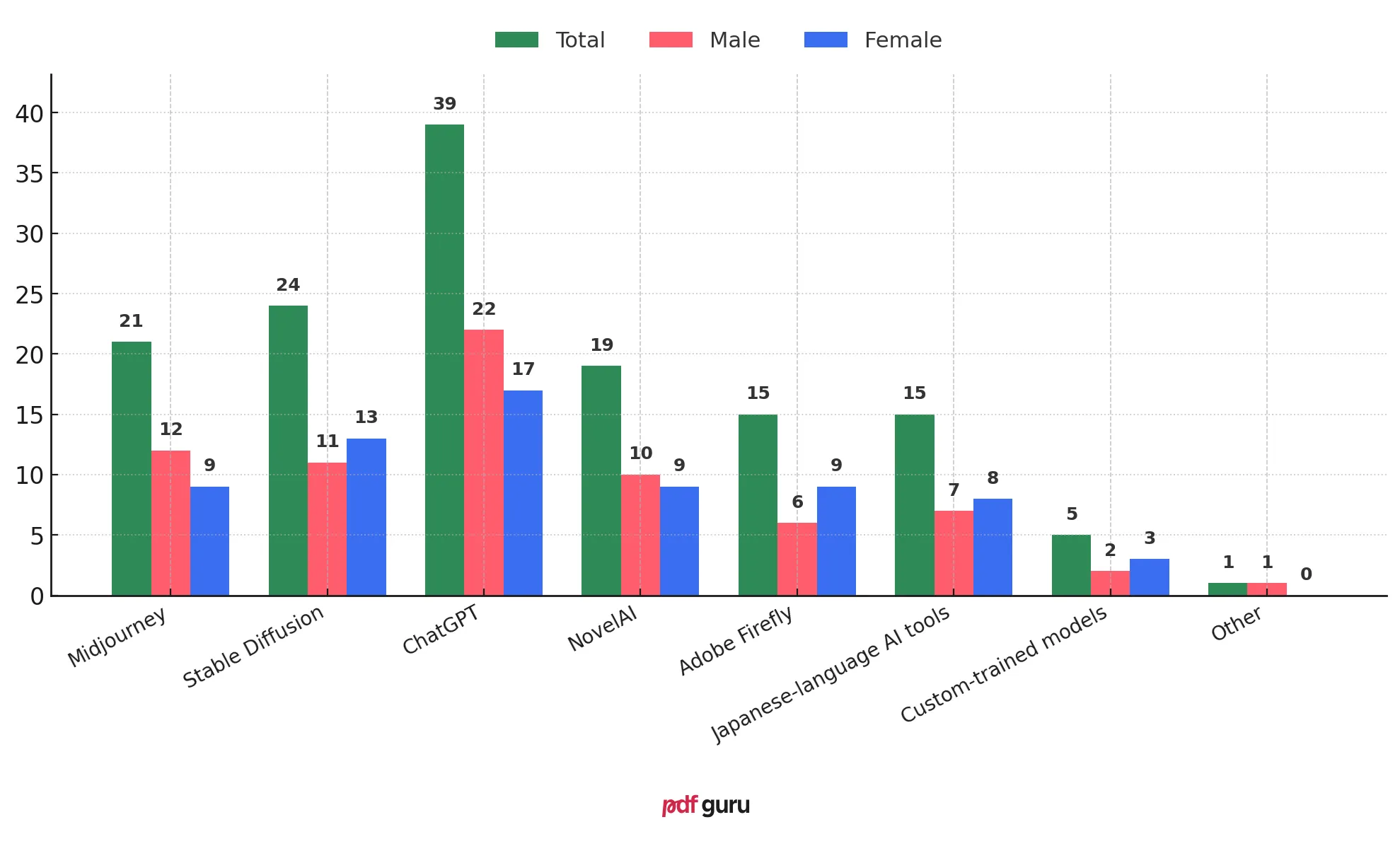
Sample: 44 men and 30 women
(Asked only to creators who had used AI tools.)
Among manga creators who use AI, ChatGPT is the most widely adopted tool (52.7%), reflecting the strong role of text-based assistance for tasks such as plotting and dialogue. Image-generation tools are more varied, with Stable Diffusion (32.4%), Midjourney (28.4%), and NovelAI (25.7%) all commonly used. This mix suggests that creators rely on AI both for writing support and for visual experimentation.
Overall, creators use a combination of language models and image generators, drawing on each tool’s strengths depending on their workflow needs.
Q4 Do you feel AI tools improve your productivity as a manga creator? (SA)
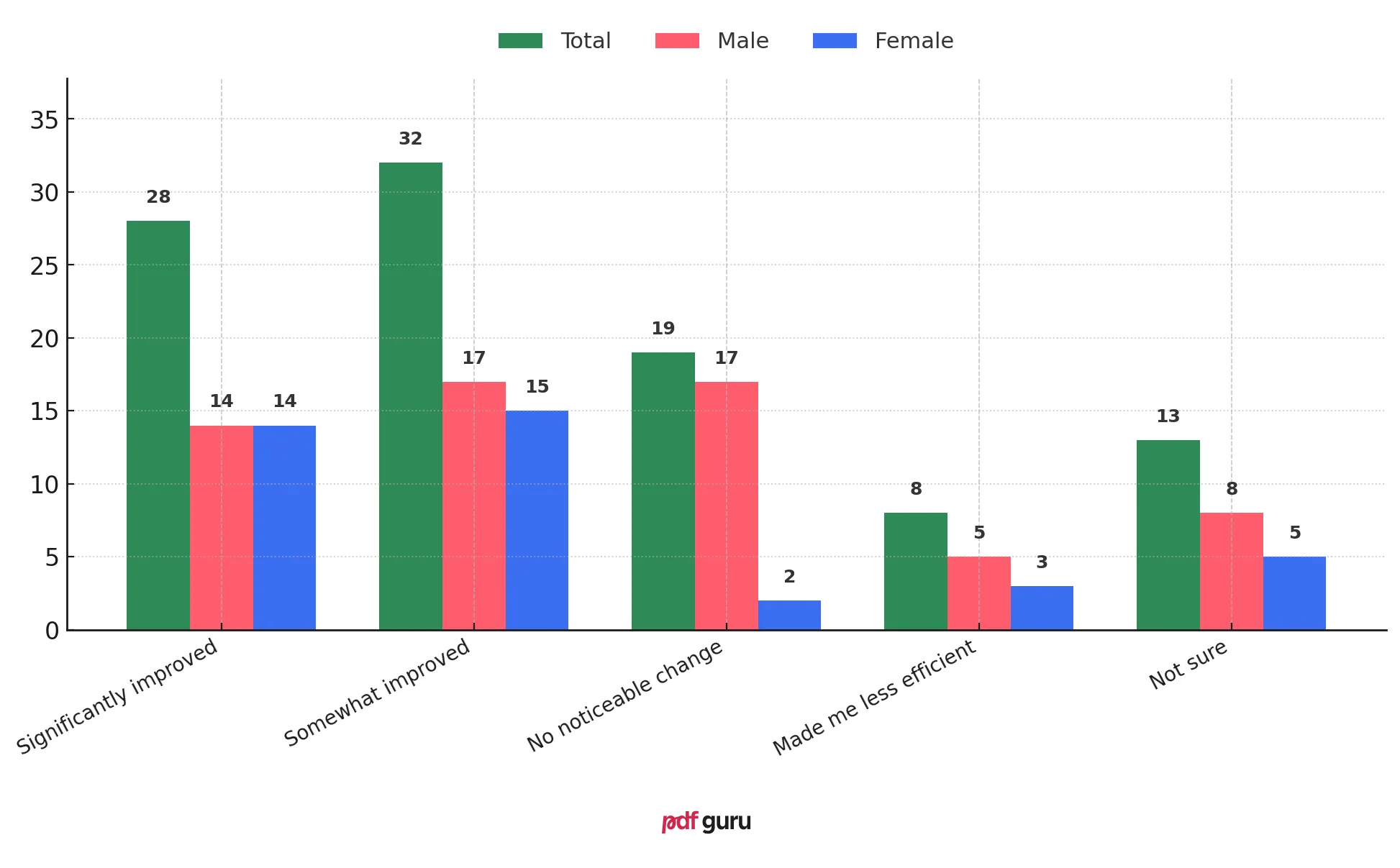
Sample: 61 men and 39 women
(Asked only to creators who had worked in manga production.)
Most creators feel that AI has improved their productivity. A combined 60% say it has made their workflow either “significantly” or “somewhat” more efficient, while only 8% feel it has slowed them down.
There is one clear gender difference: women are much more likely than men to report productivity gains from using AI, while men more often say it has made no noticeable difference. This suggests that, within this sample, female creators may be getting more practical benefits from AI tools in their daily work.
Overall, creators tend to view AI as a helpful addition to their workflow, with many reporting meaningful improvements in efficiency.
Q5 What are your main concerns regarding AI use in manga creation? (MA)
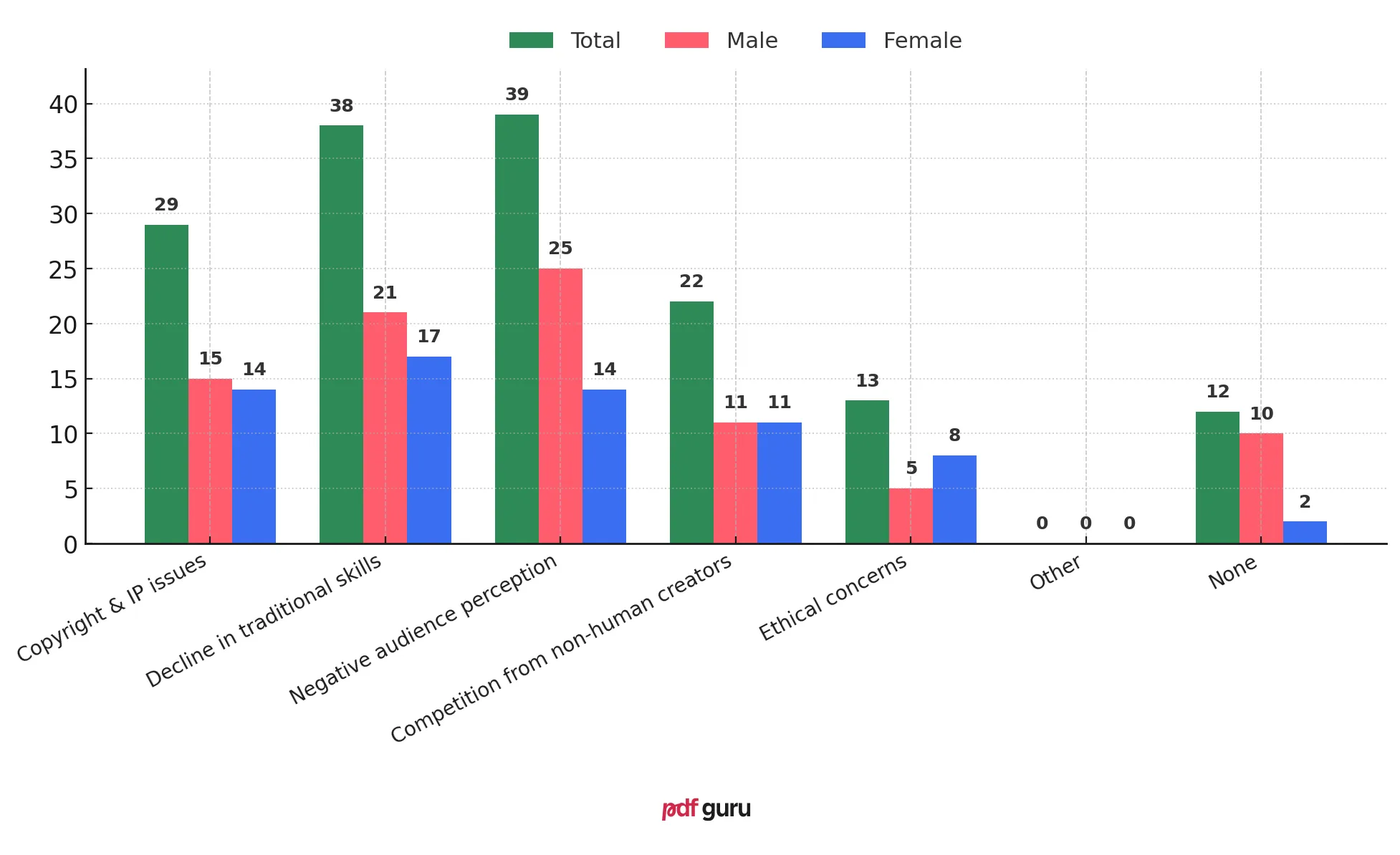
Sample: 61 men and 39 women
(Asked only to creators who had worked in manga production.)
Creators most often point to audience reaction and the erosion of traditional skills as their main concerns about AI use in manga, cited by 39% and 38% respectively. Compared with these issues, relatively few creators worry about competition or legal risks, suggesting that debates around AI are driven more by questions of craft and audience trust than by commercial or regulatory pressure.
Q6 What role do you think AI will play in the future of manga creation? Please select the option closest to your opinion. (SA)
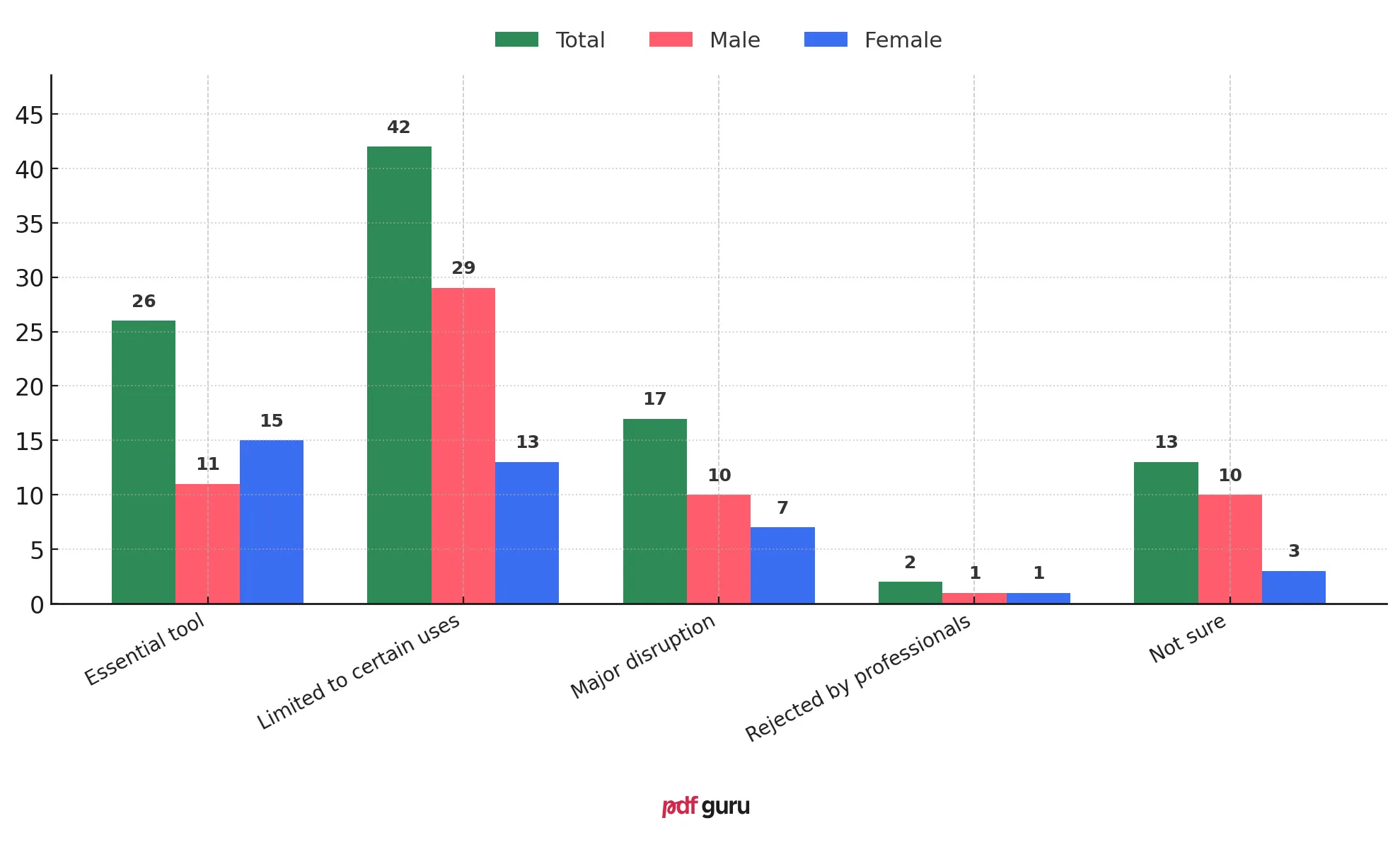
Sample: 61 men and 39 women
(Asked only to creators who had worked in manga production.)
Creators hold mixed views about the long-term role of AI in manga production. The largest group (42%) believes AI will remain limited to specific uses, seeing it as a helpful assistant rather than a transformative force. Others take a more expansive view: 26% think AI will become essential for many creators, while 17% expect it to bring major disruption to the field.
Women are more likely than men to see AI becoming an essential tool, whereas men more often believe its role will stay limited. This mirrors earlier findings showing that women in this sample tend to view AI more positively in terms of practical usefulness.
Q7 Have you ever been directly or indirectly involved in manga adaptations for Western audiences (live-action, animation, or co-productions)? (SA)
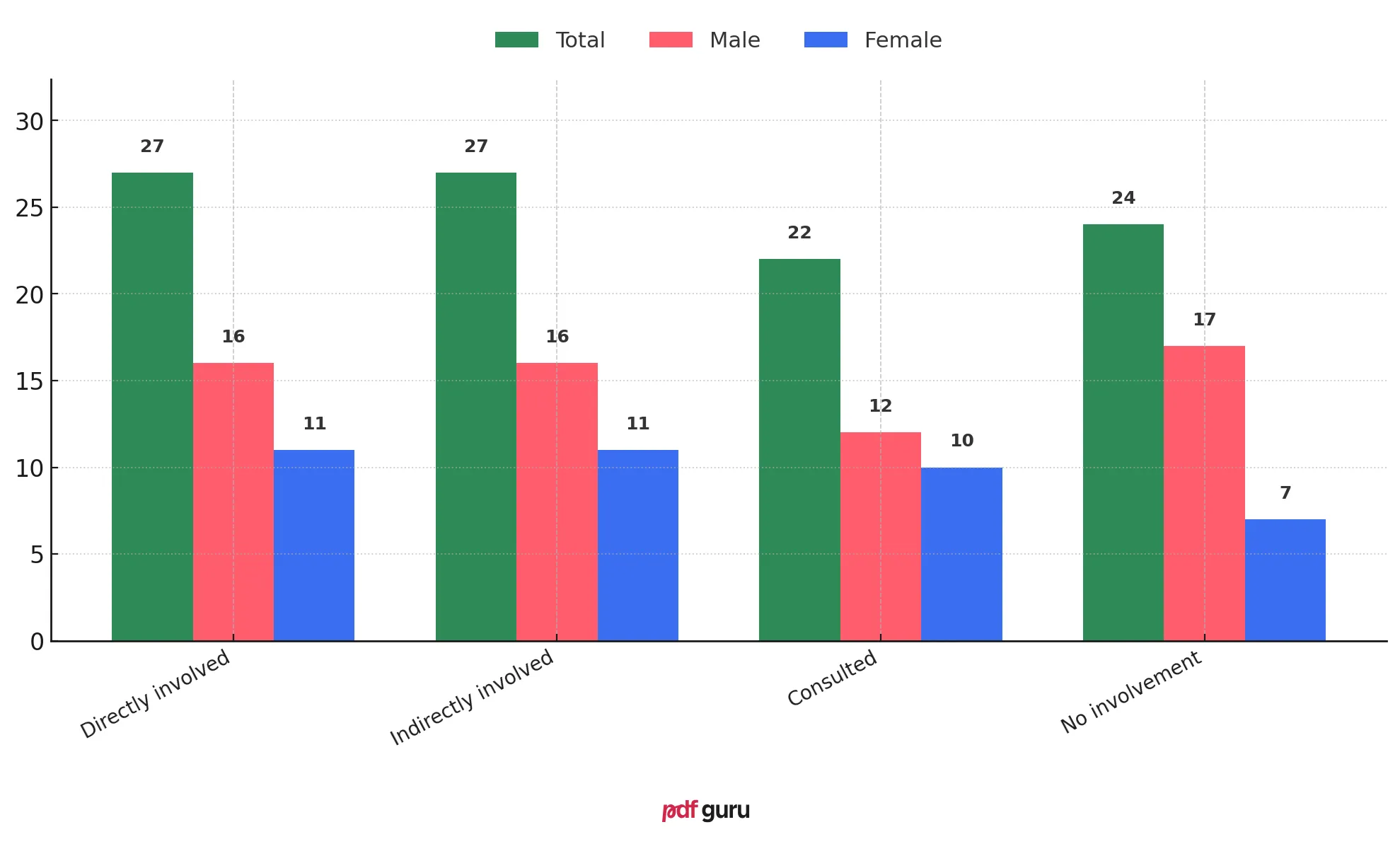
Sample: 61 men and 39 women
(Asked only to creators who had worked in manga production.)
Many creators in this survey have experience with Western adaptations. In total, 54% have been involved either directly or indirectly, while only 24% say they have had no involvement at all. This indicates a sample with strong international exposure and familiarity with cross-cultural production.
Q8 How do Western adaptations affect the global image of Japanese manga, in your opinion? (SA)
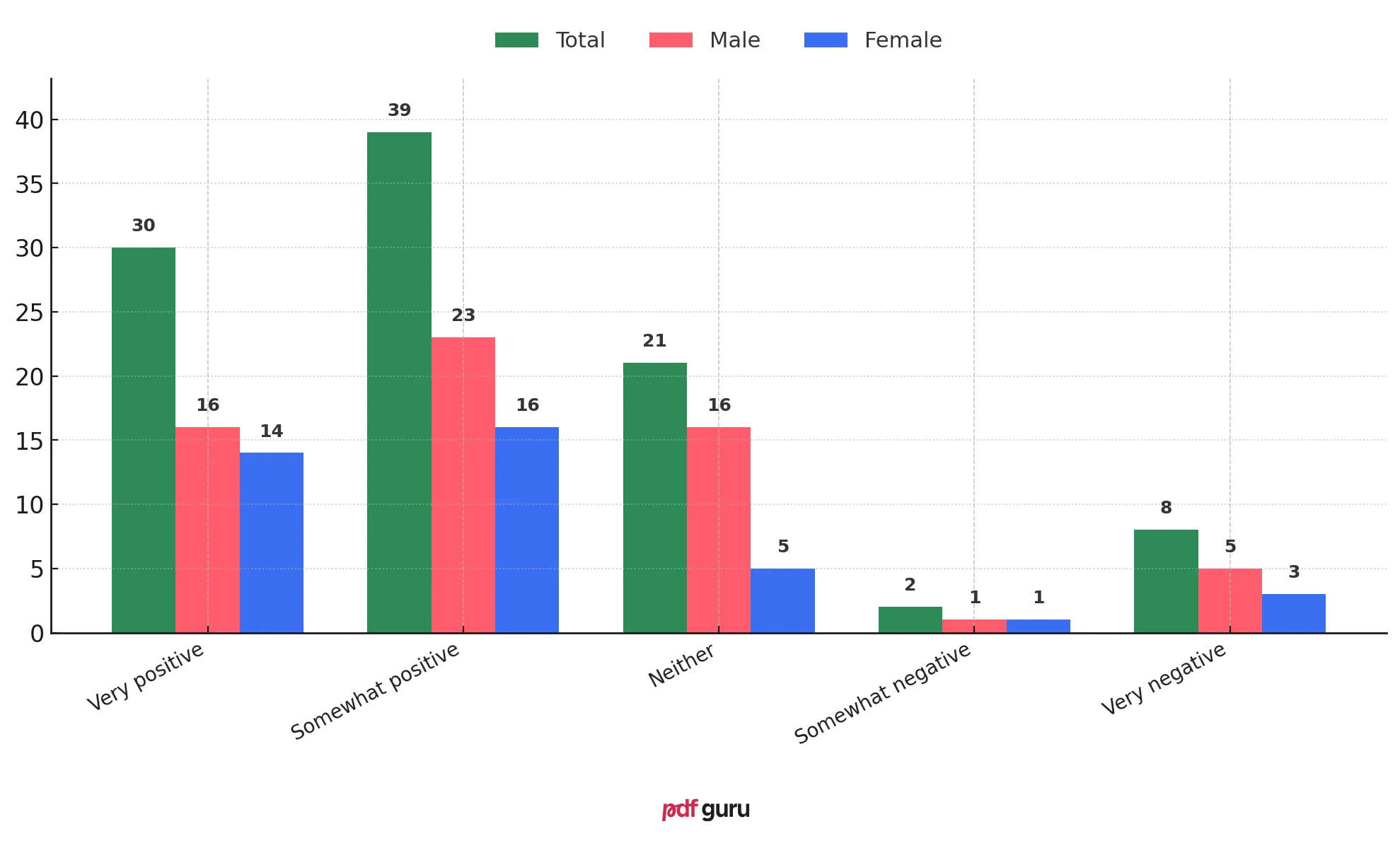
Sample: 61 men and 39 women
Asked only to creators who had worked in manga production.)
Creators tend to view Western adaptations positively. A combined 69% believe these adaptations improve the global image of Japanese manga, with very few (10%) seeing them as harmful. Neutral views make up the remaining share, indicating that outright negativity toward overseas adaptations is rare among professionals.
Q9 What do you think are the biggest challenges in adapting Japanese manga for Western audiences? (MA)
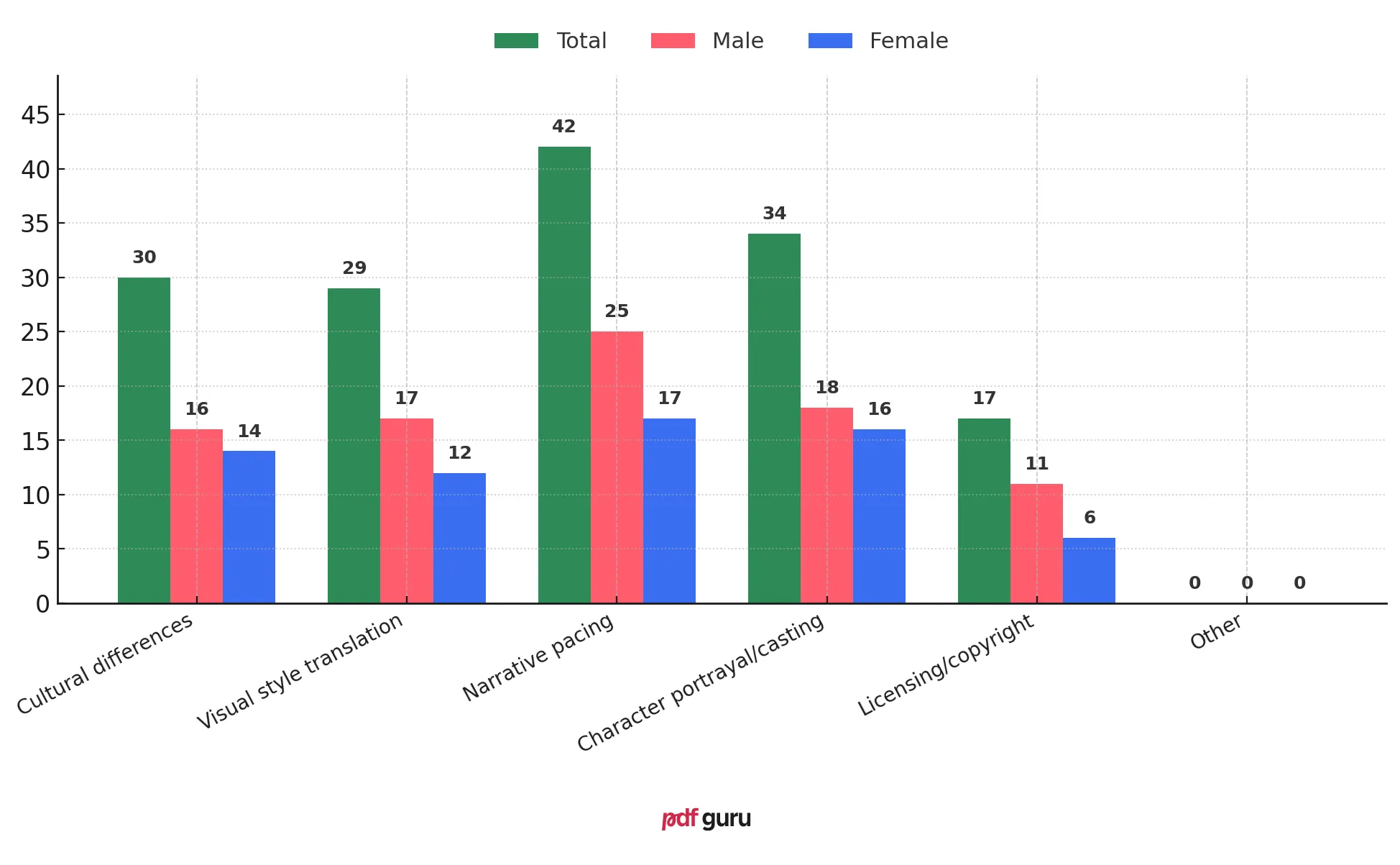
Creators see several challenges in adapting manga for Western audiences, with the biggest hurdle being narrative pacing and structure (42%). This is followed by character portrayal or casting (34%) and cultural or contextual differences (30%). These results suggest that adapting the storytelling style of manga is viewed as more challenging than visual translation or legal issues.
Q10 Do you believe Japanese professionals should be involved in Western adaptations? (SA)
Sample: 61 men and 39 women
(Asked only to creators who had worked in manga production.)
There is broad agreement that Japanese creators should be involved in Western adaptations. Altogether, 62% believe such involvement is either essential or ideally included, showing a strong preference for creative oversight to help maintain authenticity. Only a small minority (8%) feel that involvement is unnecessary.
Conclusion
The survey results reveal a landscape where readers and creators often view the future of manga through very different lenses. Among the public, attitudes toward AI lean cautious to resistant. Most readers say they would not want to read a manga produced primarily by AI, and many worry that the technology could threaten artists’ livelihoods or erode the traditional skills that define the medium. For a large share of readers, AI-generated manga feels disconnected from the human creativity and emotional authenticity they value.
Creators, however, take a more pragmatic stance. AI tools are already embedded in many professional workflows, and a majority report tangible efficiency gains. Importantly, creators tend to draw a clear line between AI as a support tool and AI as a substitute for authorship. Just as AI is widely accepted in non-creative contexts — such as summarizing long reports or research documents using tools like a PDF summarizer — manga creators primarily use AI to streamline specific tasks while preserving human control over storytelling and artistic direction.
Western live-action adaptations highlight a similar gap between public sentiment and professional perspectives. For many readers, these adaptations barely register: nearly half did not know they existed, and those who do are unlikely to watch them. Indifference outweighs both enthusiasm and criticism, and when concerns arise, they tend to focus on cultural misrepresentation rather than storytelling or production quality. For the general audience, Western adaptations appear aimed at a different market entirely.
Manga creators, by contrast, are more engaged and often more optimistic. Many have participated in overseas adaptation projects, either directly or indirectly, and most believe such projects help strengthen the global presence of Japanese manga. They also strongly support the involvement of Japanese professionals in the adaptation process — not as a rejection of Western collaboration, but as a way to safeguard cultural and narrative integrity.
Taken together, the findings point to a public that prioritizes authenticity and tradition, and a creator community that is increasingly open to new tools and global opportunities. Innovation is welcomed when it enhances creative work or expands manga’s reach, but both readers and professionals expect change to respect the cultural identity and craftsmanship at the heart of Japanese manga.