
What is Form 4562?
Form 4562 is designed for reporting depreciation and amortization. Businesses use it to detail the expenses for their assets over time. It's necessary for any business owner who has purchased property or equipment and needs to account for its gradual wear and tear.
This form helps reduce taxable income by allowing these expenses to be deducted, making it crucial for accurate tax reporting and ensuring businesses don't overpay taxes.
What is Form 4562 used for?
What is Form 4562 used for?
Here's what it's used for:
- To report depreciation on property.
- To claim the Section 179 deduction.
- To report information on the listed property.
How to fill out Form 4562

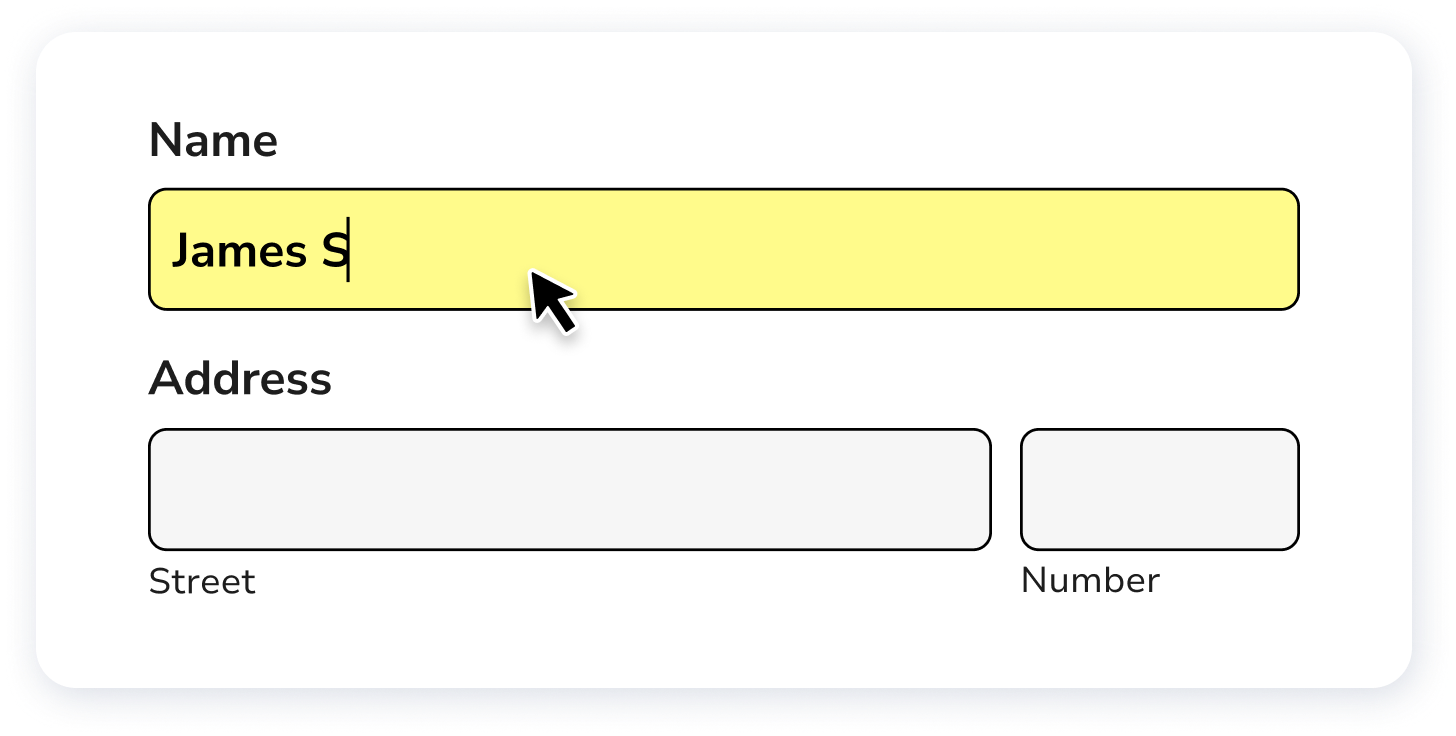
1. Open the form in our PDF editor
Click "Get Form" to load an electronic Form 4562 and start entering your details.
2. Start with Part V if you have listed property
The form itself says: complete Part V before Part I if you use any listed property. This is easy to miss, but the order matters because Part V feeds into Part I. Listed property includes:
- Passenger vehicles weighing 6,000 lbs or less — subject to annual depreciation caps ($20,200 first-year limit with bonus depreciation in 2025).
- Other transportation property like motorcycles, pickup trucks, and aircraft — anything that lends itself to personal use.
- Property used for entertainment or recreation — including cameras and audio equipment, unless used exclusively at your regular business establishment.
Listed property must be used more than 50% for business to qualify for accelerated depreciation and Section 179. If business use drops to 50% or below, you must recapture (pay back) excess depreciation from prior years.
3. Claim your Section 179 deduction in Part I (Lines 1–13)
Section 179 lets you deduct the full cost of qualifying property in the year you place it in service instead of depreciating it over multiple years. For 2025:
- Maximum deduction: $2,500,000 — but this starts phasing out dollar-for-dollar once total Section 179 property placed in service exceeds $4,000,000.
- SUV limit: $31,300 for vehicles rated between 6,000 and 14,000 lbs gross vehicle weight.
- Business income limit: Your Section 179 deduction can't exceed your total business income (line 11). Any excess carries forward to 2026 on line 13.
You must file a separate Form 4562 for each business or activity, but compute Part I only once across all forms.
4. Claim bonus depreciation in Part II (Lines 14–16)
Part II handles the special depreciation allowance (bonus depreciation) and non-MACRS depreciation. For 2025, the rates depend on when you acquired the property:
- Acquired after January 19, 2025: 100% bonus depreciation is restored under the One Big Beautiful Bill Act. This applies to most MACRS property with a recovery period of 20 years or less.
- Acquired before January 20, 2025: The phase-down continues — 40% for most property, 60% for long production period property and certain aircraft.
- You can elect out of bonus depreciation at the asset class level (e.g., all 5-year or all 7-year property). This is irrevocable and may make sense if you expect higher tax rates in future years.
Do not include listed property here — report it in Part V instead. Line 16 is for older depreciation methods like ACRS (pre-1987 property).
5. Report MACRS depreciation in Part III (Lines 17–20)
MACRS is the standard depreciation method for most business property. Part III has three sections:
- Line 17 (Section A): Enter the total depreciation for assets placed in service in prior years that you're still depreciating. Pull this from your depreciation schedule — do not recalculate it.
- Lines 19a–19j (Section B): Current-year assets using the General Depreciation System (GDS). Pick the correct recovery period: 5-year for computers and vehicles, 7-year for furniture and equipment, 27.5-year for residential rental property, 39-year for nonresidential real property.
- Lines 20a–20e (Section C): Current-year assets using the Alternative Depreciation System (ADS) — required for certain property like tax-exempt use property, property used predominantly outside the U.S., and any property for which you make the ADS election.
Again, do not include listed property here — that goes in Part V only.
6. Add it all up in Part IV (Lines 21–22)
Part IV is the summary. Line 22 adds your Section 179 deduction, bonus depreciation, MACRS depreciation, and listed property depreciation into one total. This is the number that transfers to the appropriate line of your tax return — Schedule C line 13 for sole proprietors, Form 1065 line 16a for partnerships, or the corresponding line on corporate returns.
7. Report amortization in Part VI (Lines 42–44)
Part VI covers intangible assets that are amortized over time — business startup costs, organizational costs, goodwill, patents, and other Section 197 intangibles (typically amortized over 15 years). Enter new amortization beginning this year on line 42, and ongoing amortization from prior years on line 43. Note: startup and organizational costs up to $5,000 each can be deducted immediately in your first year if total costs don't exceed $50,000.
8. Sign the form
Use our electronic signature tool to sign and date the certification section.
9. Download your Form 4562
Click "Done" to save and download your printable Form 4562.
Who is required to fill out Form 4562?
Business owners and self-employed individuals are responsible for filling out Form 4562. This form is used for reporting depreciation and amortization.
The IRS uses Form 4562 to review deductions for business assets. Tax professionals may also use it to ensure clients' compliance and optimize deductions.
When is Form 4562 not required?
If you don't have any depreciation or amortization to report for your business or income-producing property, you might not need this form.
Individuals who are not business owners or do not have property that requires the calculation of depreciation or amortization also do not need to fill out Form 4562. This includes taxpayers who do not own any assets used in a trade or business or for the production of income.
When is Form 4562 due?
The deadline for Form 4562 is the same as your income tax return: April 15th for individuals and March 15th for most businesses. If these dates fall on a weekend or holiday, the due date is the next business day.
Remember, submitting Form 4562 on time is crucial to ensure compliance with IRS requirements.
How to get a blank Form 4562
To get a blank Form 4562, simply visit our platform where the template, issued by the IRS, is pre-loaded in our editor, allowing you to start filling it out right away. Remember, our website helps you fill out and download the form, but does not assist in submitting it.
Do you need to sign Form 4562?
Based on what we've found, Form 4562 might not need a signature. It's wise to confirm with the latest guidance.
Always double-check the requirements. This ensures your document is up to date.
Where to file Form 4562?
Form 4562 can be submitted online through IRS e-file. It's also possible to send it by mail if preferred.
Other forms related to Form 4562
Schedule C (Form 1040) – Profit or Loss From Business
Your total depreciation and amortization from Form 4562, line 22 is entered on Schedule C, line 13. If you also claim amortization, the total from Part VI goes to the appropriate expense line or Part V (Other Expenses).
Who uses it: Sole proprietors and single-member LLCs reporting business income and expenses.
Form 1065 – U.S. Return of Partnership Income
Partnerships attach Form 4562 to report depreciation and amortization at the entity level. The total from line 22 flows to Form 1065, line 16a. Section 179 deductions are passed through to individual partners on Schedule K-1.
Who uses it: Partnerships and multi-member LLCs taxed as partnerships.
Form 1120 / 1120-S – U.S. Corporation Income Tax Return
Corporations must file Form 4562 every year they claim depreciation or amortization — even if no new assets were placed in service. For S corporations (Form 1120-S), Section 179 deductions pass through to shareholders on Schedule K-1 rather than being deducted at the corporate level.
Who uses it: C corporations and S corporations claiming depreciation on business assets.
Form 7205 – Energy Efficient Commercial Buildings Deduction
The Section 179D deduction for energy efficient commercial buildings was previously claimed on Form 4562 but now has its own dedicated form. Do not use Form 4562 for this deduction — use Form 7205 instead and attach it to your return.
Who uses it: Building owners or designers claiming deductions for energy efficient improvements to commercial buildings.
Form 4797 – Sales of Business Property
When you sell or dispose of depreciable property, the depreciation you previously claimed (including Section 179 and bonus depreciation) may need to be recaptured as ordinary income. Form 4797 calculates this recapture. The depreciation history from your Form 4562 records directly affects the gain calculation on Form 4797.
Who uses it: Businesses selling, exchanging, or disposing of depreciable assets or real property used in a trade or business.
Form 2106 – Employee Business Expenses
Employees who deduct job-related vehicle expenses — using either the standard mileage rate or actual expenses — use Form 2106 instead of Form 4562. This distinction matters: if you're self-employed, use Form 4562; if you're an employee, use Form 2106.
Who uses it: Employees with deductible job-related vehicle expenses (limited to certain categories like Armed Forces reservists and fee-basis state officials).
Form 8829 – Expenses for Business Use of Your Home
If you use the actual expense method for your home office, Form 8829 calculates depreciation on the business-use portion of your home. This depreciation is separate from Form 4562 — it's computed on Form 8829 and reported on Schedule C, line 30.
Who uses it: Self-employed individuals claiming the home office deduction using the actual expense method.
Form 6251 – Alternative Minimum Tax (Individuals)
Depreciation can trigger AMT adjustments. If you used the 200% declining balance method (GDS) for personal property, you may need to recalculate using the 150% method for AMT purposes. This difference is reported as an adjustment on Form 6251. No adjustment is needed for property that uses the straight-line method or ADS.
Who uses it: Individual taxpayers whose depreciation deductions may create or increase an AMT liability.
Publication 946 – How to Depreciate Property
The IRS's comprehensive reference for all depreciation topics — MACRS tables, recovery periods, conventions, Section 179 rules, bonus depreciation rules, and listed property requirements. Essential for determining the correct method and recovery period before completing Form 4562.
Who uses it: Anyone filing Form 4562 who needs to look up recovery periods, depreciation methods, or the applicable rules.
Publication 463 – Travel, Gift, and Car Expenses
Covers the rules for claiming vehicle depreciation and the standard mileage rate — directly relevant to Part V of Form 4562. Includes the annual depreciation limits for passenger automobiles, recordkeeping requirements, and how to handle mixed business/personal use.
Who uses it: Business owners and employees who use vehicles for work and need guidance on Part V listed property rules.