
What is Form 720?
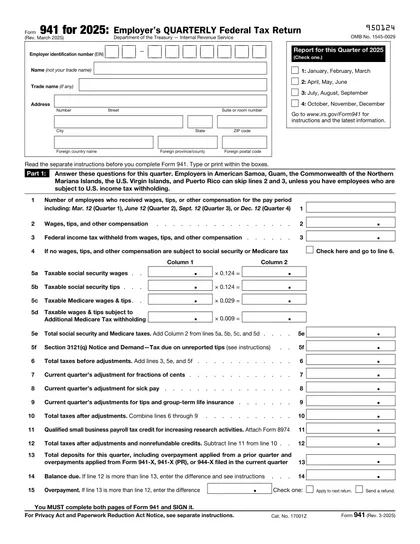
Form 720 is for businesses required to pay federal excise taxes on specific goods, services, and activities. This includes environmental taxes, communications and air transportation taxes, fuel taxes, and more. It's vital for companies involved in these sectors to complete and submit Form 720 quarterly to comply with tax regulations and avoid penalties.
What is Form 720 used for?
Form 720 is essential for reporting federal excise taxes. Here's what it's used for:
- To report and pay taxes on specific goods and services.
- To fulfill quarterly tax reporting obligations for businesses.
- To comply with federal regulations on environmental and communication services.
How to fill out Form 720

Follow these instructions for Form 720:
1. Open the form in our PDF editor
Click "Get Form" to load an electronic Form 720 and start entering your details.
2. Identify your business and quarter
You'll need an EIN before filing — if you don't have one, apply at www.irs.gov/EIN. Select the correct quarter-ending date, since each quarter is filed and paid separately. Check "Final return" only if you will never owe excise taxes again.
3. Report your Part I taxes by IRS number
Skip every line that doesn't apply — only complete the IRS numbers for taxes you actually owe. A few things to watch for:
- Environmental taxes require a separate Form 6627 attached to your return.
- Fuel taxes have different rates depending on fuel type and how it's removed or sold — check the instructions to confirm the correct rate before calculating.
- Air transportation taxes combine a percentage tax and a per-segment fee — don't confuse the two.
- Gas guzzler tax requires Form 6197 to compute the amount before entering it here.
4. Report your Part II taxes
Part II includes taxes that follow different deposit rules than Part I:
- PCOR fee — only due once a year in the second quarter (July 31 deadline). Use the rate that matches your policy or plan year ending date, not the calendar year.
- Indoor tanning — the 10% tax applies to the amount the customer pays, not your cost.
- Stock repurchase tax — requires Form 7208 attached. This is a 1% excise tax that applies to the fair market value of repurchased shares.
5. Calculate your balance in Part III
Part III nets your total tax against deposits and claims. Key points:
- If you made semimonthly deposits via EFTPS during the quarter, enter the total on line 5. Most filers are required to deposit by EFT — checks are only for certain situations.
- If you have an overpayment from a prior quarter, it carries forward to line 6 automatically.
- You can choose to have any current overpayment refunded or applied to next quarter's return.
6. Break down your deposit schedule on Schedule A
Required for all Part I taxes. The IRS uses this to verify your semimonthly deposits were on time — record your liability for each half-month period, not when you made the deposit. If you use the alternative method for communications or air transportation taxes (IRS Nos. 22, 26, 27, 28), report those separately in Section 2.
7. Claim fuel credits on Schedule C (if eligible)
You can recover excise tax on fuel used for nontaxable purposes — for example, farm use, export, or government use. You must keep records of the seller's name and address, purchase dates, and, if applicable, proof of export. Each claim requires a separate explanatory statement attached to the return.
8. Sign the form
Use our electronic signature tool to sign and date the certification section.
9. Download your Form 720
Click Done to save and download your printable Form 720.
Who is required to fill out Form 720?
Form 720 is primarily filled out by businesses responsible for excise taxes on specific goods, services, and activities.
Regulatory agencies and the IRS use Form 720 to monitor excise tax payments and ensure compliance.
When is Form 720 not required?
Form 720 is not required for individuals or businesses not engaged in activities subject to excise taxes. This includes most private consumers and companies operating outside sectors such as fuel production, air transportation, and the manufacturing of specific goods.
If your operations do not involve these federally taxable services and products, you're likely exempt from filing Form 720. It's important for taxpayers to review the list of taxable services and products to determine their filing obligations accurately.
When is Form 720 due?
The deadline for Form 720 is on the last day of the month following the end of the quarter. This means you must submit it by April 30, July 31, October 31, and January 31 for each respective quarter.
Remembering these dates helps ensure your submission is timely and in accordance with official requirements.
How to get a blank Form 720
For those needing to complete an IRS-issued Form 720, our platform offers a pre-loaded template in our editor, allowing users to fill out the necessary information directly on our site and download it afterward for their records, without the need to submit it through us.
How to sign Form 720 online
For electronic filing, the IRS-approved portals do not require a traditional Form 720 to be signed or uploaded. Instead, these portals guide users through a streamlined, structured process with dedicated screens. Users select the relevant options and complete the filing without ever needing to interact with a physical form.
For manual filing, the form must be printed, filled out, and signed by hand before submission.
Where to file IRS Form 720?
Form 720 must be submitted by mail to the IRS. It's for businesses to report federal excise taxes.
Some businesses can also submit Form 720 online via the IRS e-file system.
Complete your Form 720 swiftly!
Other forms related to Form 720?
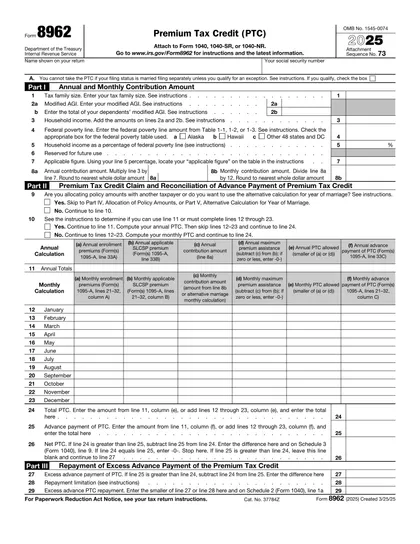
Form 6627 – Environmental Taxes
A required attachment to Form 720 when you owe environmental excise taxes. You use it to calculate petroleum superfund tax, chemical taxes, and ozone-depleting chemical (ODC) taxes separately before the totals carry over to Part I of Form 720.
Who uses it: Businesses importing or manufacturing petroleum products, taxable chemicals, or ODCs.
Form 6197 – Gas Guzzler Tax
Computes the excise tax on vehicles that fall below federal fuel economy standards. The calculated tax transfers to Form 720, Part I, IRS No. 40. Also supports one-time filings for individuals importing a single gas-guzzling automobile.
Who uses it: Manufacturers and importers of fuel-inefficient vehicles.
Form 7208 – Excise Tax on Repurchase of Corporate Stock
Calculates the 1% excise tax on the fair market value of stock repurchased by a corporation. The result is reported on Form 720, Part II, IRS No. 150.
Who uses it: Corporations that buy back their own shares.
Form 720-X – Amended Quarterly Federal Excise Tax Return
Used to correct tax liabilities reported on a previously filed Form 720. You can increase or decrease the amount originally reported, but you cannot use Form 720-X to change most Schedule C fuel claims.
Who uses it: Businesses that discover errors on a prior quarter's excise tax return.
Form 8849 – Claim for Refund of Excise Taxes
A standalone refund claim for excise taxes — separate from Form 720's Schedule C. It has multiple schedules: Schedule 1 for nontaxable fuel uses by the purchaser, Schedule 2 for registered vendor sales, Schedule 3 for biodiesel and alternative fuels, and Schedule 6 for other excise tax overpayments.
Who uses it: Businesses seeking refunds for fuel used in nontaxable ways or for excise tax overpayments.
Form 8453-EX – Excise Tax Declaration for an IRS e-file Return
Authorizes an electronic return originator (ERO) to submit your Form 720 electronically. It serves as the signature document when you e-file, rather than mailing a paper return.
Who uses it: Businesses e-filing Form 720 through an approved IRS provider.
Form 4136 – Credit for Federal Tax Paid on Fuels
Claims an income tax credit — not an excise tax refund — for federal fuel taxes already paid on fuel used for nontaxable purposes. Filed with your annual income tax return (Form 1040 or 1120), not with Form 720.
Who uses it: Businesses and individuals who paid fuel excise tax but used the fuel in a tax-exempt way (farming, off-highway, export).
Form 2290 – Heavy Highway Vehicle Use Tax Return
A separate annual excise tax return for heavy vehicles (55,000 lbs or more) used on public highways. Despite both being excise taxes, the heavy vehicle use tax is not reported on Form 720.
Who uses it: Owners of heavy trucks and highway vehicles.
Publication 510 – Excise Taxes
The IRS's comprehensive reference covers every tax reported on Form 720 — including current rates, definitions, deposit rules, fuel tax credits, and refund procedures. Essential reading if you're unsure which IRS numbers apply to your business.
Who uses it: Anyone filing Form 720 who needs detailed guidance beyond the form instructions.