
What is Schedule C?
The 1040 Schedule C is a tax form for individuals who run their own business or work as freelancers. It's used to report how much money the business made or lost over the year. This form helps calculate the business's taxable income, which is then added to the personal income on the main tax return. It's important for anyone who is self-employed, including sole proprietors and independent contractors, to fill out this form to comply with IRS requirements and ensure accurate tax payments.
What is Schedule C used for?
The 1040 Schedule C is essential for reporting income or loss from a business you operated or a profession you practiced as a sole proprietor. Here's what it's used for:
- To report income or loss from a business or profession.
- To claim deductions for business expenses.
- To calculate the cost of goods sold. -To report information on home office deductions.
How to fill out Schedule C (Form 1040)

1. Open the form in our PDF editor
Click "Get Form" to load an electronic Schedule C and start entering your details.
2. Identify your business (Lines A–J)
The header collects key details about your business — a few things to know:
- Line A: Use the IRS principal business activity codes in the instructions — this is not a free-text description. Picking the wrong code can trigger audit flags.
- Line D: You only need an EIN if you have employees or file excise/pension returns. Most solo freelancers can use their SSN.
- Line G: "Material participation" matters — if you answer No, your losses may be limited under passive activity rules.
- Lines I–J: If you paid any individual $600+ for services, you're required to file Form 1099-NEC. Answering "Yes" to I and "No" to J is a red flag.
3. Report your income (Part I, Lines 1–7)
Enter all business income — not just what's on your 1099s. A few common mistakes to avoid:
- Line 1: If you're a statutory employee (W-2 with box 13 checked), report that income here and check the box — not on your main 1040.
- Cash and app payments count as gross receipts even if you didn't receive a 1099-K or 1099-NEC for them.
- Line 4: Only enter the cost of goods sold if you sell products. Service-based businesses leave this blank and skip Part III.
4. Deduct your business expenses (Part II, Lines 8–28)
This is where most filers save money. Key tips:
- Line 9 (Car expenses): Choose either the standard mileage rate (70¢/mile for 2025) or actual expenses — you can't use both. Keep a mileage log either way.
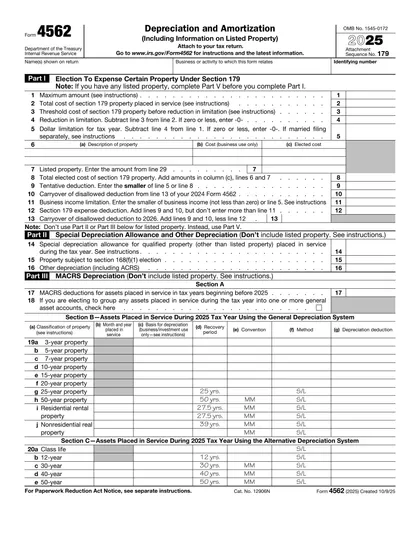
- Line 13 (Depreciation): If you placed new assets in service this year, you must file Form 4562. Section 179 and 100% bonus depreciation (restored for assets placed in service after Jan. 19, 2025) can let you deduct the full cost immediately.
- Line 24b (Meals): Business meals are 50% deductible — the temporary 100% deduction for restaurant meals expired after 2022.
- Line 27b (Other expenses): List any legitimate business expenses not covered by lines 8–27a in Part V on page 2. Common examples include software subscriptions, professional development, and bank fees.
5. Calculate your net profit or loss (Lines 29–32)
After subtracting expenses from income:
- Line 30 (Home office): Deduct this last — use either the simplified method ($5/sq ft, up to 300 sq ft = $1,500 max) or Form 8829 for actual expenses. The space must be used regularly and exclusively for business.
- Line 31: Your net profit flows to Schedule 1 (Form 1040), line 3, and to Schedule SE for self-employment tax. You'll owe SE tax on top of income tax.
- Line 32: If you have a loss, you must indicate whether all your investment is at risk. If not, Form 6198 is required, and your loss deduction may be limited.
6. Complete Part III if you sell products (Lines 33–42)
Only needed if you carry inventory or have cost of goods sold. Choose your inventory valuation method (cost, lower of cost or market, or other) and keep it consistent year to year — changing methods requires an explanation attached to your return. Do not include your own labor in line 37.
7. Report vehicle info in Part IV (if claiming car expenses)
Complete Part IV only if you claim car/truck expenses on line 9 and are not filing Form 4562. The IRS looks closely at whether your vehicle was available for personal use — if the answer is yes, make sure your business mileage is well-documented with dates, destinations, and purposes.
8. Sign the form
Use our electronic signature tool to sign and date the certification section.
9. Download your Schedule C
Click Done to save and download your printable Schedule C.
Who is required to fill out Schedule C?
Form 1040 Schedule C is primarily filled out by sole proprietors or single-member LLCs that operate a business. It is also used by statutory employees (those whose W-2 has the "Statutory employee" box checked in box 13). It's used to report income or loss from a business.
After submission, the IRS uses this form to assess the correct amount of tax owed by the business. Investors or lenders might also review it to understand the business's financial health.
When is Schedule C not required?
Not everyone needs to complete Form 1040 Schedule C. If you're an employee who does not engage in a business or have self-employed income, you won't need this form.
Individuals who receive income solely from wages, salaries, tips, or investment earnings also do not require this form. This form is specifically for business owners or self-employed individuals who need to report profits or losses.
When is Schedule C due?
The deadline for Schedule C is April 15th. This date aligns with the annual tax filing deadline for individuals in the United States. If April 15th falls on a weekend or holiday, the due date is moved to the next business day.
If you file for an extension, the extended due date is October 15th. Remember to mark this on your calendar to ensure your documents are submitted on time.
How to get a blank Schedule C
To get a blank Schedule C, issued by the IRS, visit our platform where this template is pre-loaded in our editor. You can start filling it out right away and download it for your records once completed. Remember, our website helps you prepare the form, but you'll need to submit it according to official guidelines.
Do you need to sign Schedule C (Form 1040)?
You do not need to sign Schedule C separately. According to official IRS instructions, Schedule C is an attachment to your Form 1040 individual income tax return. It's crucial to stay up to date with IRS guidelines. Always check for the latest information.
Remember, tax requirements can change. Ensuring your documents are correct and up-to-date is key. Verify with official sources to maintain compliance.
Where to file 1040 Schedule C?
Schedule C can be submitted online via IRS e-file options. This method speeds up processing.
It can also be sent by mail. Ensure all sections are completed accurately before sending. Retain copies of your Schedule C and all supporting documentation for your records.
Other forms related to IRS Schedule C
Schedule SE (Form 1040) – Self-Employment Tax
Calculates the Social Security and Medicare tax you owe on your Schedule C net profit. The self-employment tax rate is 15.3% on the first $176,100 of net earnings (2025), with the 2.9% Medicare portion applying to all earnings above that. Your net profit from line 31 of Schedule C flows directly to Schedule SE.
Who uses it: Anyone with $400 or more in net self-employment income.
Schedule 1 (Form 1040) – Additional Income and Adjustments to Income
The bridge between Schedule C and your Form 1040. Your net profit or loss from line 31 is entered on Schedule 1, line 3, where it becomes part of your total income. You also deduct the employer-equivalent portion of your SE tax here as an adjustment.
Who uses it: All Schedule C filers — the profit or loss must pass through Schedule 1 to reach your 1040.
Form 4562 – Depreciation and Amortization
Required when you place depreciable assets in service during the year, claim Section 179 expensing, or use listed property (like a vehicle) for business. The total depreciation from Form 4562 is entered on Schedule C, line 13.
Who uses it: Schedule C filers who purchased business equipment, vehicles, or other depreciable assets during the tax year.
Form 8829 – Expenses for Business Use of Your Home
Calculates the home office deduction using the actual expense method — including mortgage interest, insurance, utilities, repairs, and depreciation allocated by business-use percentage. The result transfers to Schedule C, line 30. Not needed if you use the simplified method ($5 per square foot).
Who uses it: Self-employed individuals who use part of their home regularly and exclusively for business and want to claim actual expenses.
Form 1099-NEC – Nonemployee Compensation
Reports payments of $600 or more you received as an independent contractor. The amounts shown in box 1 should be included in your Schedule C gross receipts on line 1. You may also need to issue 1099-NECs to contractors you paid.
Who uses it: Businesses paying independent contractors, and contractors receiving those payments.
Form 1099-K – Payment Card and Third-Party Network Transactions
Reports payments processed through third-party platforms (like PayPal, Stripe, or Etsy). These amounts are part of your Schedule C gross receipts. If your 1099-K includes personal transactions, report the full amount on line 1 and back out the personal portion on line 2 with a note.
Who uses it: Self-employed individuals who receive payments through payment apps or online marketplaces.
Form 8995 / 8995-A – Qualified Business Income Deduction
Calculates the Section 199A deduction — up to 20% of your qualified business income from Schedule C. The simplified Form 8995 works if your taxable income is under the threshold; Form 8995-A is for higher earners or specified service businesses where the deduction phases out.
Who uses it: Sole proprietors claiming the qualified business income (QBI) deduction on their personal return.
Form 6198 – At-Risk Limitations
Required if you have a Schedule C loss and check box 32b (some investment is not at risk). It limits your deductible loss to the amount you actually have at risk in the business — meaning money you've invested or personally borrowed.
Who uses it: Sole proprietors reporting a business loss where some of their investment is protected from financial risk.
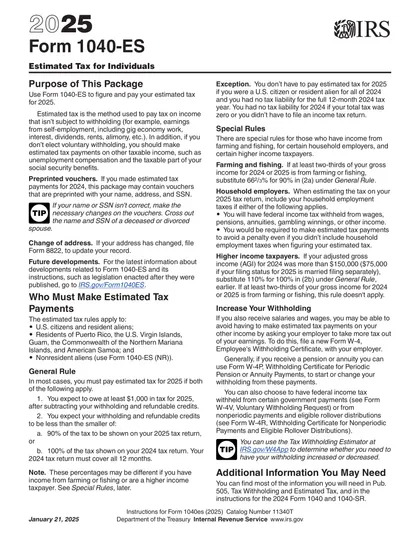
Form 1040 / 1040-SR / 1040-NR – U.S. Individual Income Tax Return
Your main federal tax return, where Schedule C results ultimately land. The net profit increases your adjusted gross income and is subject to both income tax and self-employment tax. Multiple businesses require a separate Schedule C for each.
Who uses it: All individuals filing a federal tax return — Schedule C attaches directly to it.