
What is an Oregon Bill of Sale?
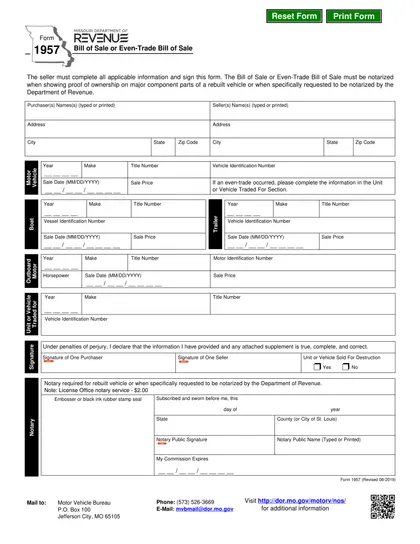
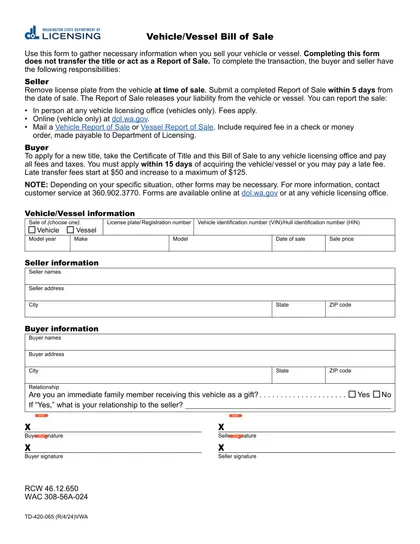
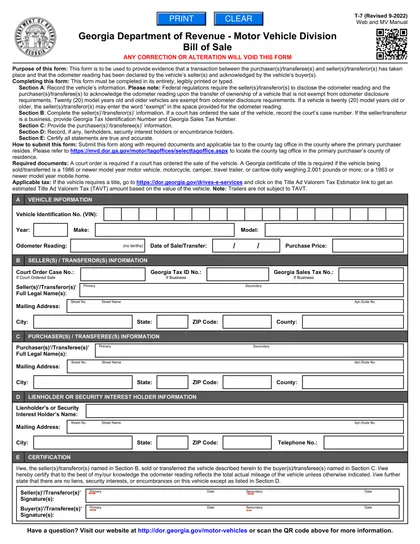
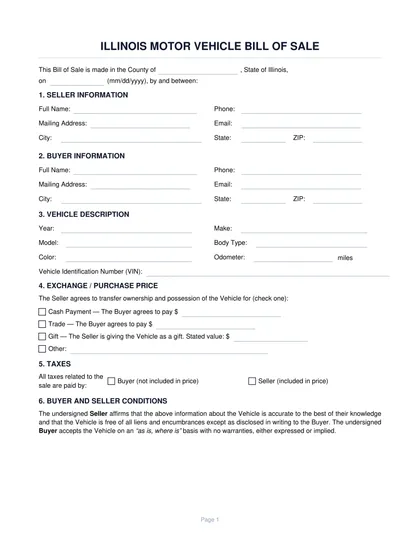
An Oregon Bill of Sale is a legal document that records the private sale of a vehicle or other personal property from a seller to a buyer in Oregon. It documents the agreed sale price, describes the item, and captures the signatures of both parties.
Oregon DMV provides an official Vehicle Bill of Sale form (Form 735-501). The seller must notify the Oregon DMV of the sale within 10 days of the transaction (ORS 803.112). The buyer must apply for a new title within 30 days of purchase to avoid a late title transfer fee. Oregon has no state sales tax on vehicle purchases, though a 0.5% statewide transit tax applies to new vehicle sales.
What is an Oregon Bill of Sale used for?
An Oregon bill of sale is used to formally document the transfer of personal property and protect both parties in a private sale. Specifically, it is used to:
- Document the transfer of personal property (vehicle, boat, firearm, equipment, or other items) from seller to buyer
- Establish the agreed purchase price on record — Oregon DMV uses this to calculate applicable sales tax, use tax, or registration fees when the buyer applies for a new title
- Protect the seller from future liability related to the property after the sale date
- Give the buyer proof of ownership pending receipt of a new title
- Serve as evidence in any dispute about the terms, price, or condition of the item at the time of sale
- Support insurance documentation — the buyer can present the bill of sale to their insurer as proof of acquisition and value
How to write a Bill of Sale in Oregon
To create a valid Oregon Bill of Sale, follow these steps:
- 1
Obtain using Form 735-501 an official bill of sale form from the Oregon DMV website, or prepare a document that includes all required information.
- 2
Fill in the full legal names and current addresses of both buyer and seller.
- 3
Enter the vehicle description: year, make, model, color, and VIN.
- 4
Record the odometer reading at the time of the sale.
- 5
Write in the agreed sale price and the date of the transaction.
- 6
Both buyer and seller sign the bill of sale. Each party should keep a signed copy.
- 7
The seller should notify the Oregon DMV of the sale as required by Oregon state law.
- 8
The buyer takes the signed bill of sale, the signed title, and other required documents to a Oregon DMV office to apply for a new title within 30 days of the purchase date.
What information should an Oregon Bill of Sale include?
An Oregon Bill of Sale should include the following information:
- Full legal names and current addresses of buyer and seller
- Vehicle description: year, make, model, color, and body type
- Vehicle Identification Number (VIN)
- Odometer reading at the time of sale
- Agreed sale price
- Date of the transaction
- Signatures of both buyer and seller
- Optional: payment method (cash, check, etc.), "as-is" clause, or lien release information
Is a Bill of Sale required in Oregon?
Yes — a bill of sale is required for private-party vehicle transfers in Oregon if the seller wants to properly notify the DMV and the buyer does not have the title alone. Oregon DMV Form 735-501 is used for this purpose.
The seller must notify the Oregon DMV of the sale within 10 days of the transaction (ORS 803.112). If you have a signed title that shows the sale price and odometer reading, the bill of sale can supplement — but not replace — the title. The buyer must apply for a new title within 30 days to avoid a late transfer fee.
Does an Oregon Bill of Sale need to be notarized?
No. Oregon does not require notarization for a private-party vehicle bill of sale. The document is legally valid with signatures from both the buyer and the seller.
Notarization may be recommended in specific situations — such as when the sale involves a power of attorney or a lien release — for additional legal protection. For standard private vehicle sales, a signed bill of sale (Form 735-501 or equivalent) without a notary stamp is fully accepted by the Oregon DMV.
How long is an Oregon Bill of Sale valid?
A Oregon Bill of Sale does not expire. Once signed by both parties, it is a permanent legal record of the property transfer and remains valid indefinitely.
For vehicle title purposes, the bill of sale is most relevant while the new title is being processed. Once the buyer receives a new title from the Oregon DMV, the bill of sale continues to serve as documentation of the original transaction — including the agreed sale price, the date of sale, and the condition of the vehicle at time of transfer.
Where can I get a blank Oregon Bill of Sale?
The official Oregon Vehicle Bill of Sale (Form 735-501) is available free of charge from the Oregon Department of Transportation / DMV website at oregon.gov/odot/DMV, or at any Oregon DMV office.
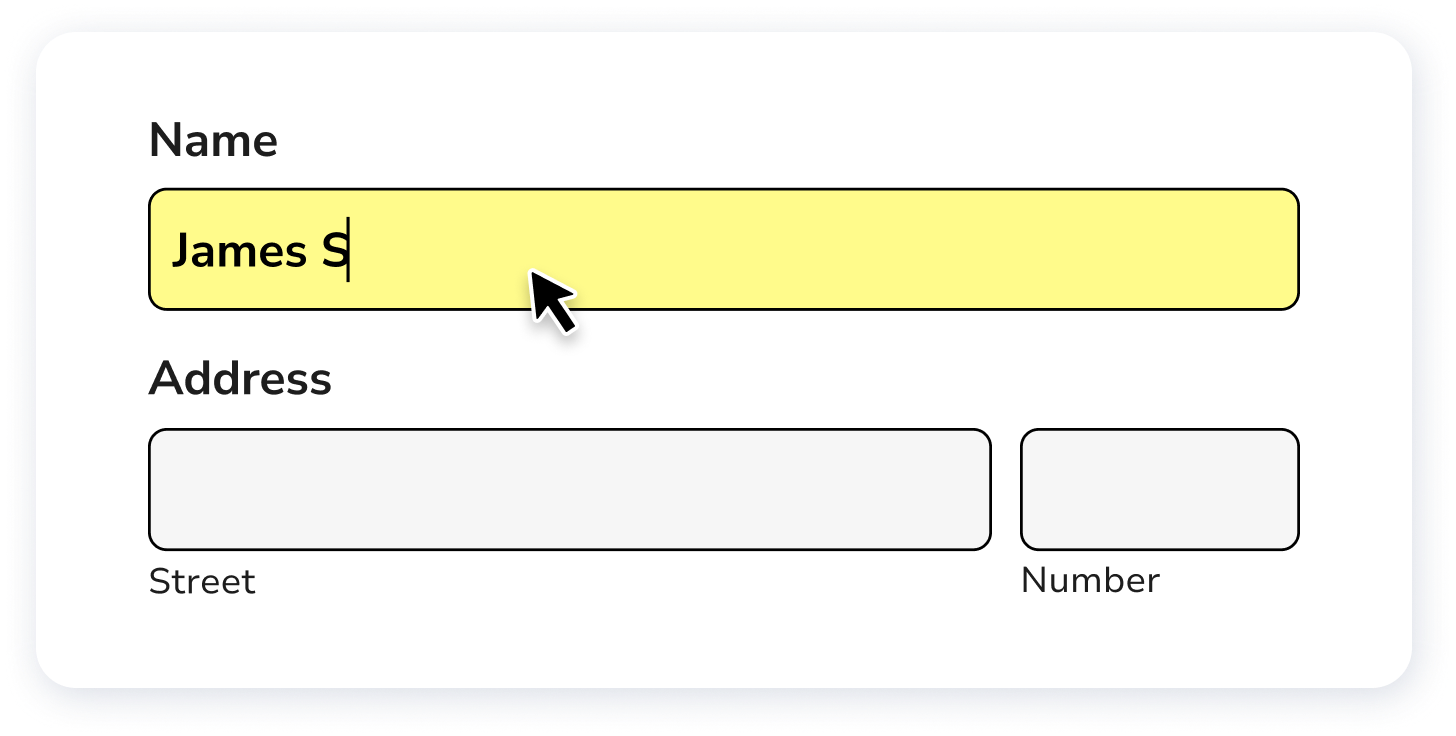
You can also use PDF Guru to fill out your Oregon Bill of Sale online. Our editor lets you complete all required fields, add your signature, and download the finished document as a PDF — no printing required.
How to sign an Oregon Bill of Sale online
PDF Guru makes it easy to sign your Oregon Bill of Sale online without printing or scanning. Once you have completed all required fields in the form, use the Sign tool in the editor. You can draw your signature with a mouse or trackpad, type your name, or upload a saved signature image. Position the signature in the designated field for the seller — if both parties are signing digitally, the buyer can do the same before the final download.
When your signatures are in place, click Done to download the completed PDF to your device. Electronic signatures are generally accepted for private-party bill of sale transactions in Oregon. If you plan to submit the bill of sale to the Oregon DMV as part of a title transfer, confirm in advance whether an original ink signature is required.