


A schedule template is a premade and reusable document that helps you organize your time and tasks. Instead of creating a new schedule from scratch each time, you fill in pre-formatted sections like time slots, days of the week, or task categories. This saves time and keeps your planning consistent.
In this guide, we cover ten types of schedule templates, when to use each one, and how to create your own.
Why do you need a schedule template in the first place?
A schedule template lets you organize your time, effort, and obligations rather than just listing them in bullet points or tables. By giving you clarity and control over how you spend your time, it helps you work more efficiently and accomplish more. Using a template also encourages you to declutter your workload and clearly identify your objectives or goals. A printable schedule not only helps you visualize your tasks but also keeps you focused, supports consistent progress toward your goals, and keeps you engaged.
Without a solid template, tasks can often overlap, deadlines get missed, and priorities become hazy. To create a schedule, you can use a variety of online tools, from Microsoft Word, Excel, and Google Sheets to our PDF templates.
A template includes fields you can quickly edit or change when you need to adjust your plans. A good schedule template provides:
- Clarity and focus: Tells you precisely what must be done and when.
- Efficiency: Eliminates repetitive planning.
- Flexibility: Can be adjusted when priorities shift.
- Accountability: Promotes consistency and diligence.
- Balance: Helps avoid overload and burnout.
Ultimately, it’s all about structure, as effective time schedule templates boost productivity and improve decision-making for everyone, from professionals overseeing teams to students juggling courses.
The best schedule templates
You can create a custom schedule using PDF Guru that you can print out later if you need an analog version. However, sometimes it’s hard to put together a template from scratch. That’s why we gathered a list of the most commonly used schedule formats, so you can choose the right one depending on the project or area you’re focusing on.
1. Weekly schedule template
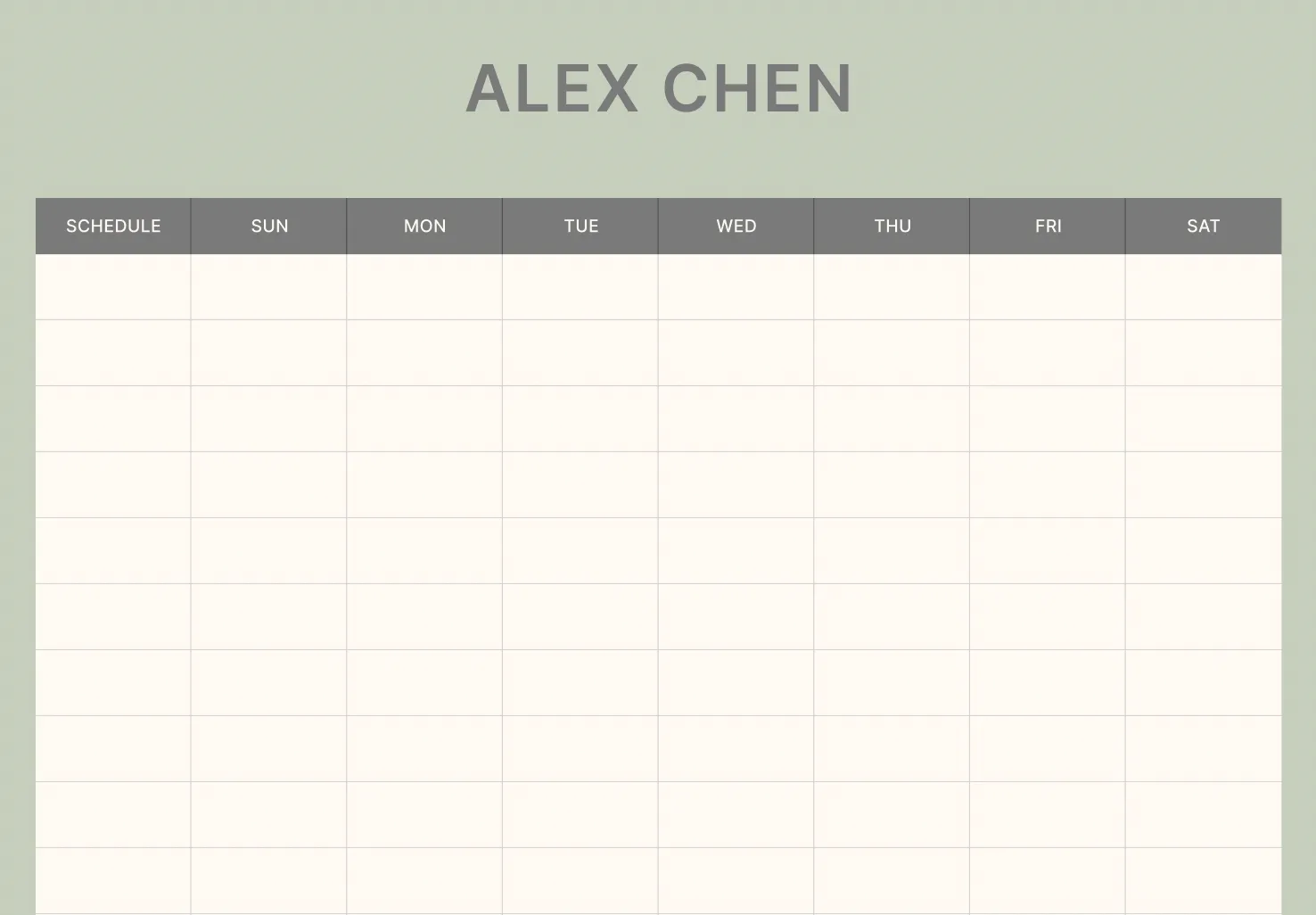
What it is: A weekly schedule template shows your entire week at a glance, with sections for each day. It's ideal for juggling work, personal obligations, and appointments, giving you a better idea of all your time gaps, recurrent commitments, and workload distribution.
You can customize weekly templates to emphasize specific days, add color-coded categories, or adjust time blocks based on your routine. Many people use weekly schedules as their primary planning tool because they provide enough detail without overwhelming you with hourly breakdowns. You can also turn a weekly schedule into a monthly overview to track longer-term projects.
Best for: Professionals, independent contractors, and families who need structured weekly plans without micromanaging every hour.
When to use it: When you need a high-level view of regular tasks, meetings, and personal commitments for the week ahead.
2. Daily schedule template
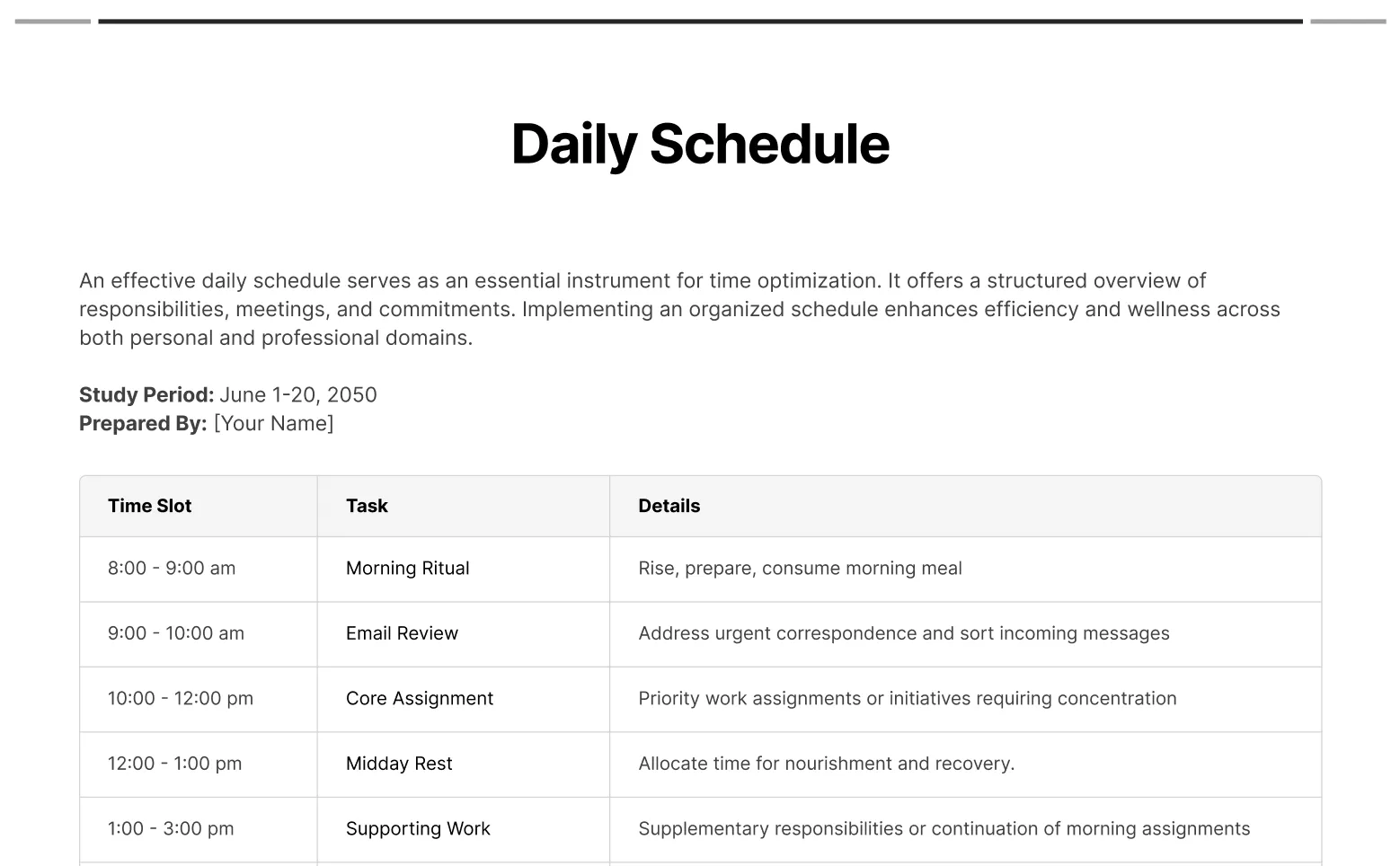
What it is: A daily schedule breaks your day into small chunks dedicated to specific time blocks or tasks.
This type of schedule template allows you to stay focused and productive, in contrast to more general calendar formats. It can also help monitor productivity and spot trends over time. Daily templates can include different sections besides the standard to-do list, for example, the top three priorities for the day. Some templates include the Eisenhower Matrix, where you can categorize your tasks based on urgency.
Best for: Students, managers, and anyone managing multiple tasks who need a detailed hour-by-hour structure.
When to use it: When you're getting busier than usual and need more structure and concentration on a daily basis. This type of schedule is ideal for productivity planning, busy workdays with tight deadlines, or days with multiple goals that need careful time management.
3. Work schedule template
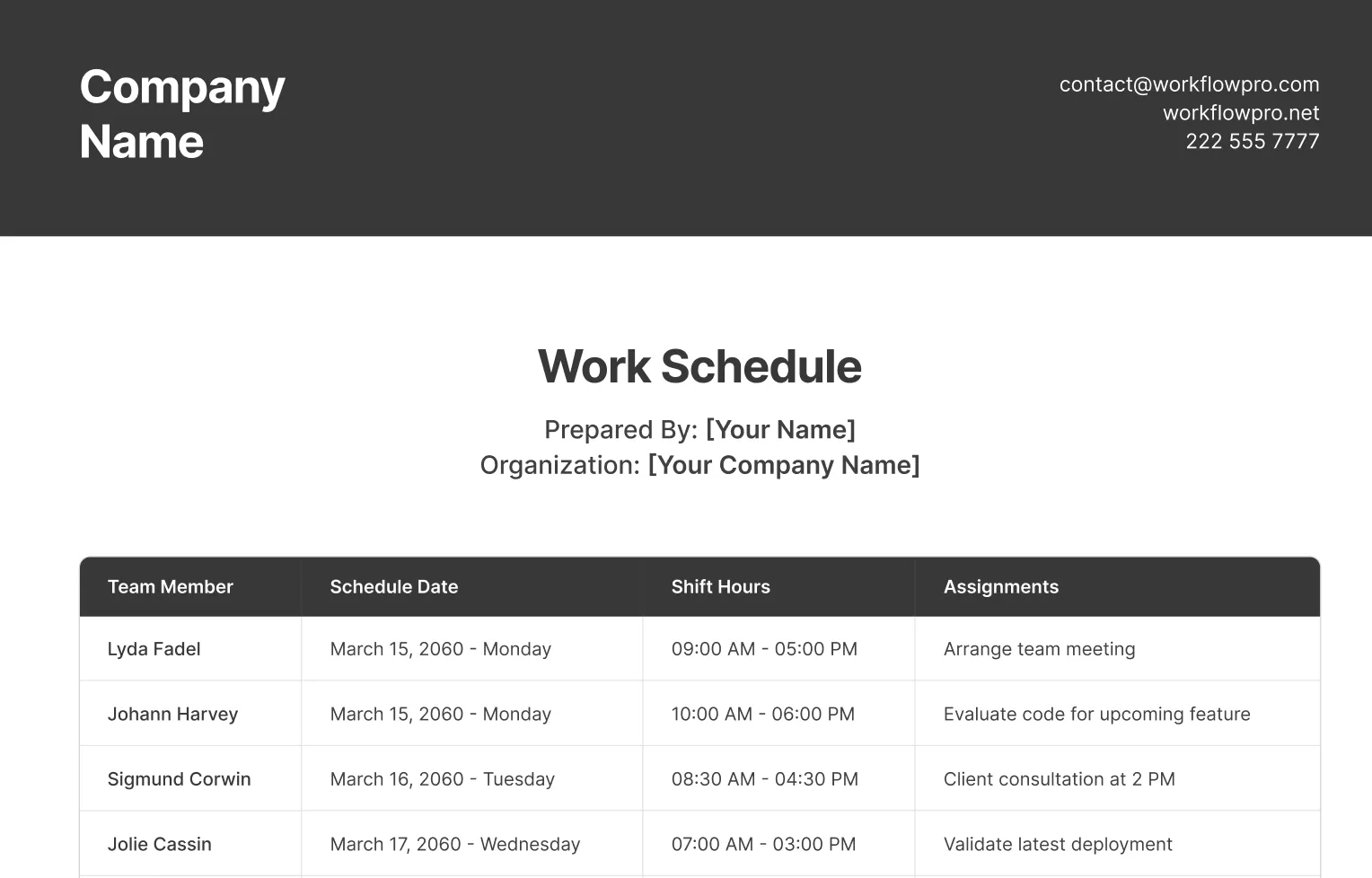
What it is: A work schedule template organizes daily tasks, work hours, deadlines, and team responsibilities. It helps individuals and managers track project timelines and coordinate work.
Digital work schedule templates make it easier to share updates, track changes, and maintain accuracy across teams. Whether you're managing a solo workload or coordinating a department, this template ensures everyone knows what needs to be done and when.
Best for: Teams, supervisors, and individuals across industries who need consistent planning.
When to use it: When planning shifts, project schedules, or role-based tasks that require clear coordination.
4. Employee schedule template
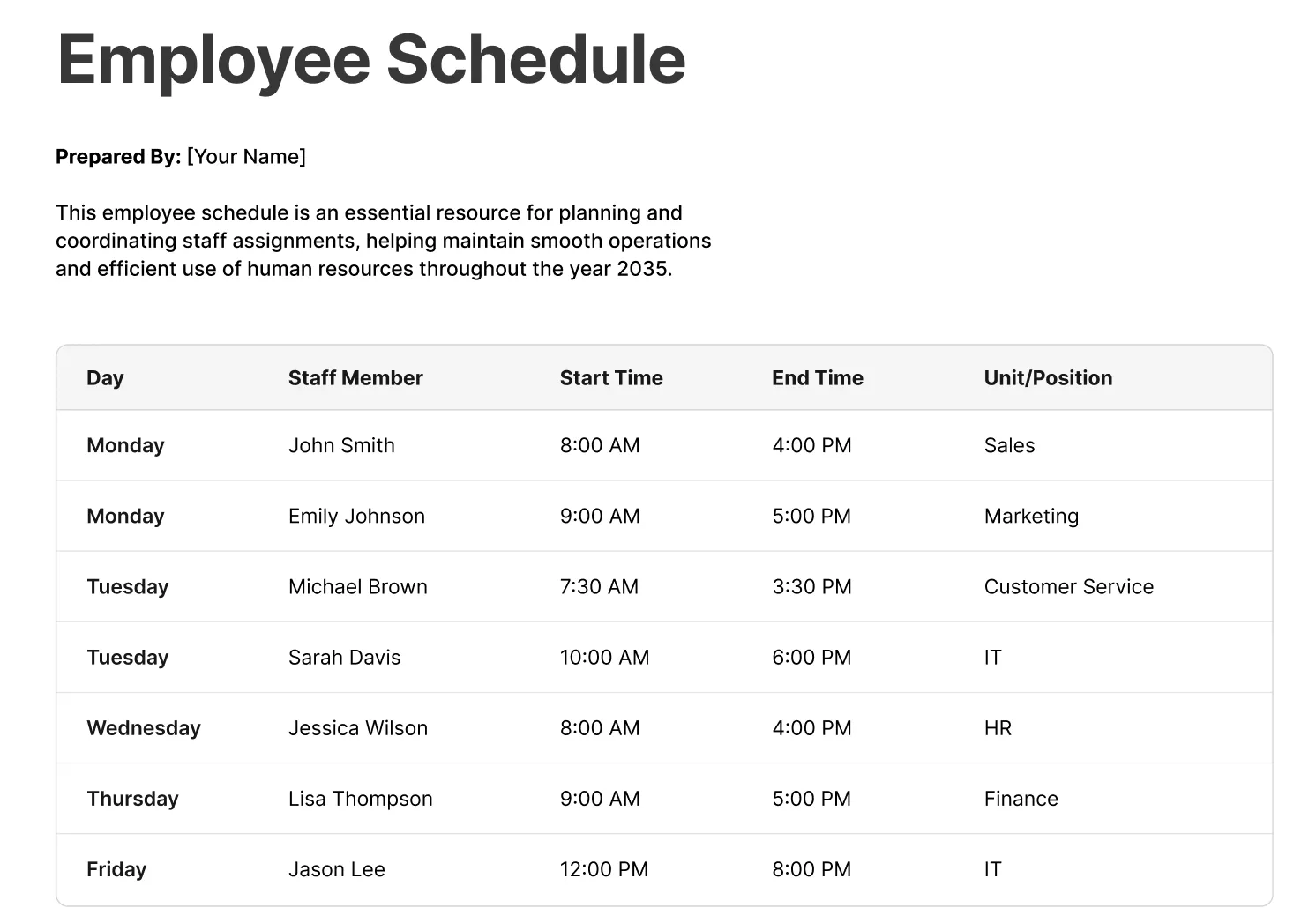
What it is: An employee schedule defines shifts, duties, and availability for team members, making workforce planning easier. It's especially useful for businesses with rotating shifts or varying work hours. Using employee shift schedule templates reduces scheduling problems and misunderstandings. An employee schedule helps managers better organize their teams and save a lot of time.
Best for: Managers in restaurants, hotels, warehouses, retail stores, and other shift-based workplaces.
When to use it: When managing a large team, rotating day and night shifts, or having inconsistent availability. This schedule template is designed for streamlined workflow, fair task allocation, enhanced transparency, and reduced conflict.
5. Class schedule template
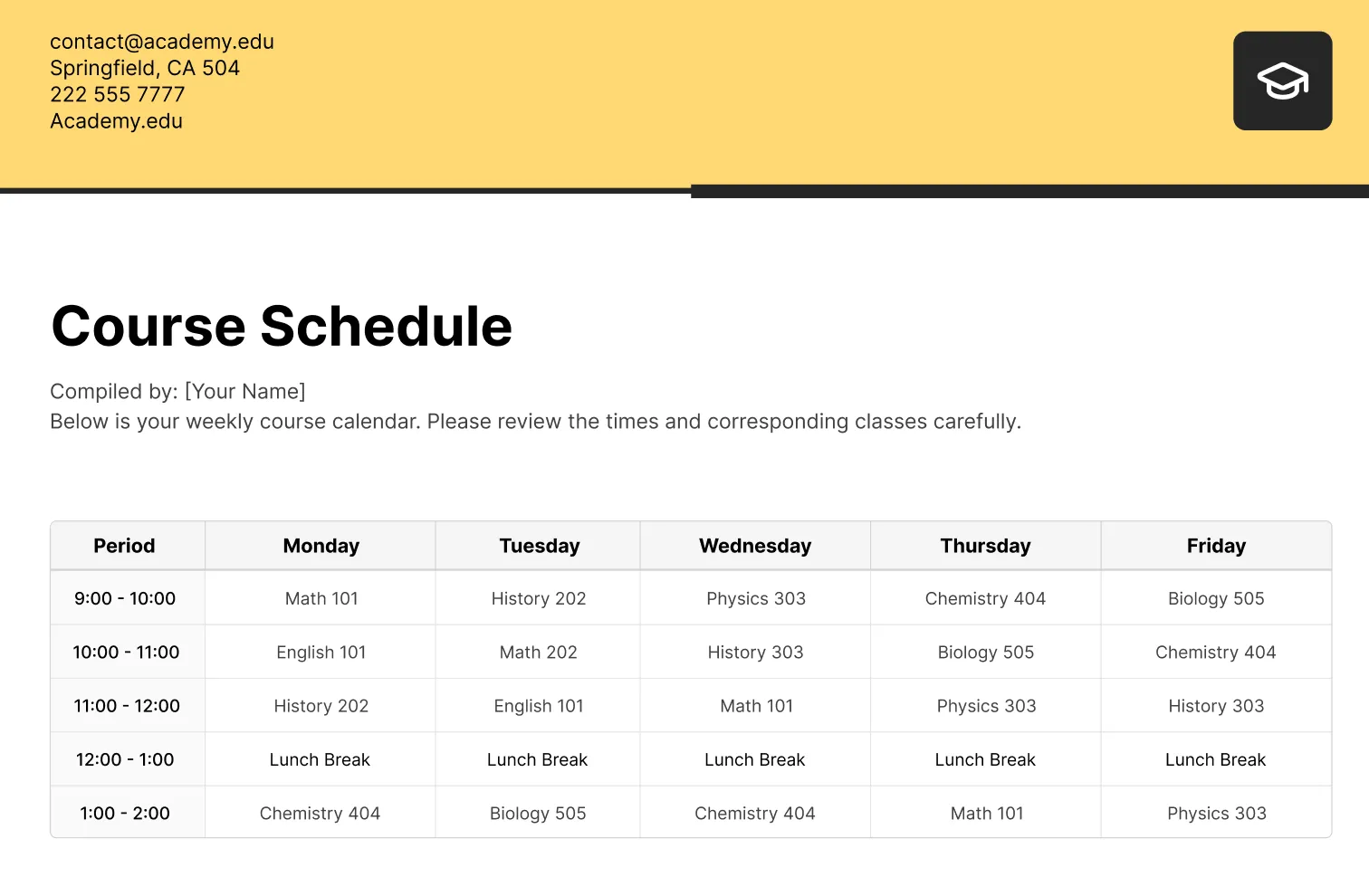
What it is: A class schedule template organizes courses, study sessions, homework, and academic deadlines in a way that is simple and easy to follow. It can help students manage their daily assignments and prevent last-minute stress. For teachers, class schedule templates can help them plan lessons or lectures for different days of the week and manage the classroom.
These templates often include sections for course names, instructors, classroom locations, and assignment due dates. By keeping all academic information in one place, class schedules help students balance coursework with extracurricular activities and prevent scheduling conflicts between classes.
Best for: Students managing coursework and teachers planning lessons across different classes.
When to use it: At the start of a term or semester to arrange lessons, study time, and academic obligations in an understandable, consistent manner.
6. Cleaning schedule template
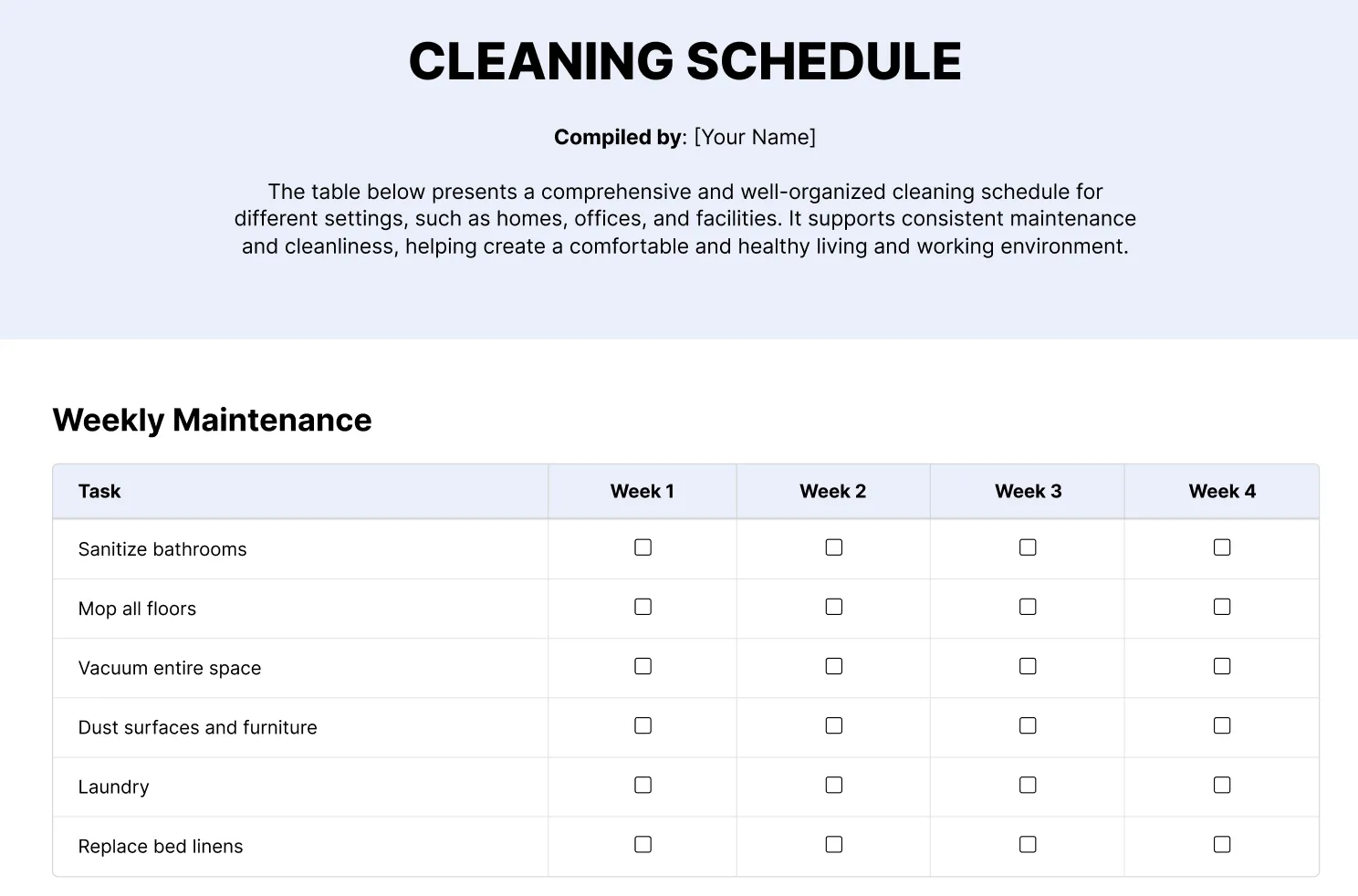
What it is: A cleaning schedule breaks down household or workplace chores into manageable daily, weekly, or monthly routines.
You can use this template to assign clear responsibilities, encourage consistency, and keep duties from piling up. It works particularly well as a shared schedule worksheet for teams or families. For families, it's particularly helpful for distributing household chores fairly among family members and teaching children responsibility. By distributing chores evenly and setting clear expectations, these templates prevent disagreements and ensure spaces stay clean without last-minute scrambles before guests arrive or inspections.
Best for: Families, roommates, teams, or anyone managing shared spaces.
When to use it: When you need to establish regular cleaning routines and break them down by day, person, or frequency.
7. Hourly schedule template
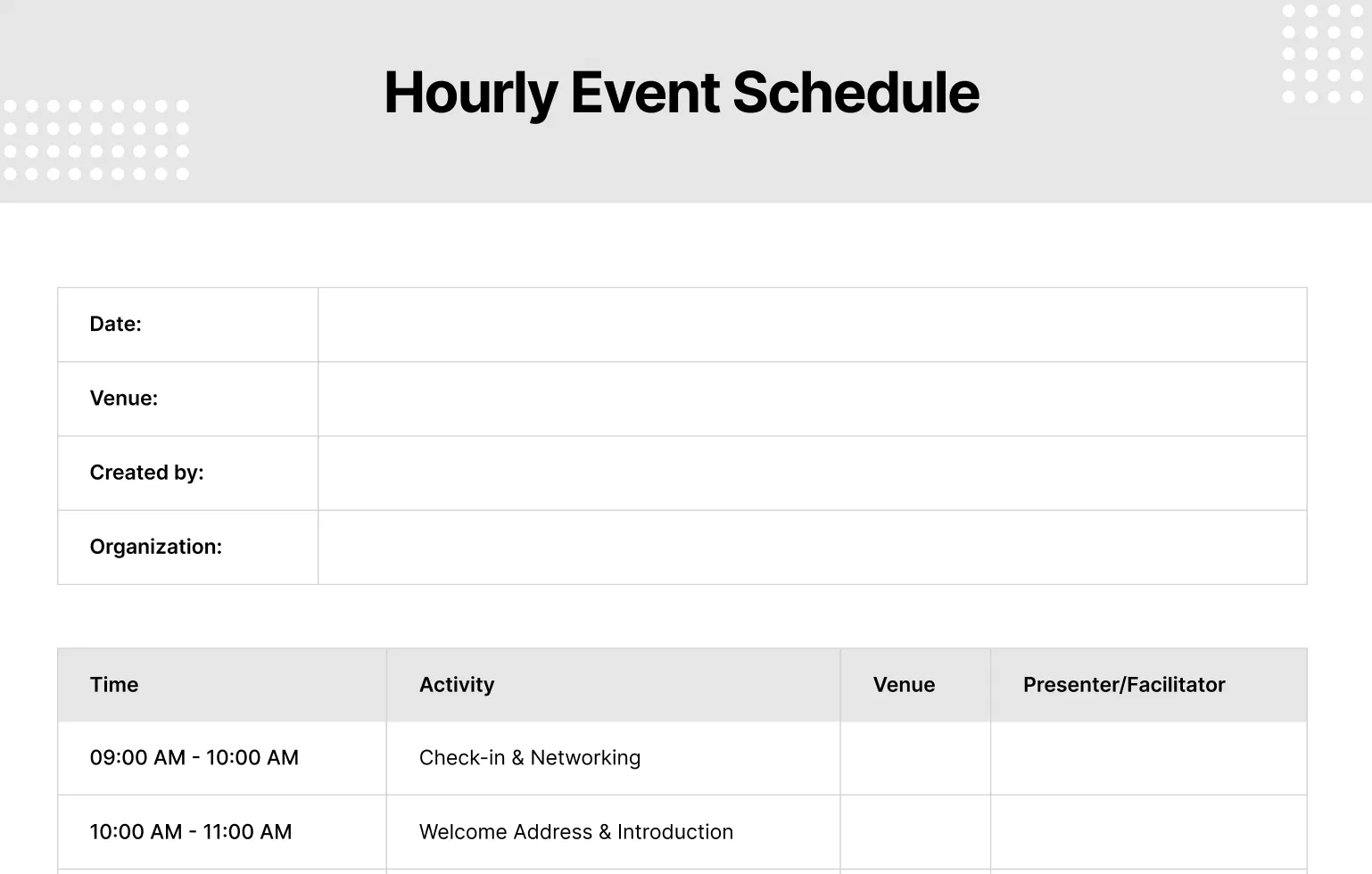
What it is: An hourly schedule divides your day into precise time blocks, often by the hour or half-hour. t’s ideal for time-sensitive work, detailed tracking, identifying inefficiencies, and improving time management.
Hourly schedules are commonly used in healthcare settings where patient appointments must be carefully coordinated, or in event planning where every activity needs to run on time. This level of detail helps you see exactly where your time goes and makes it easier to spot patterns, eliminate wasted time, and optimize your workflow for maximum productivity.
Best for: Healthcare workers, event planners, and workers in high-demand roles where every hour matters.
When to use it: This template is perfect for service-based work, event planning, time monitoring, and any other scenario where tasks are scheduled in brief bursts.
8. Study schedule template
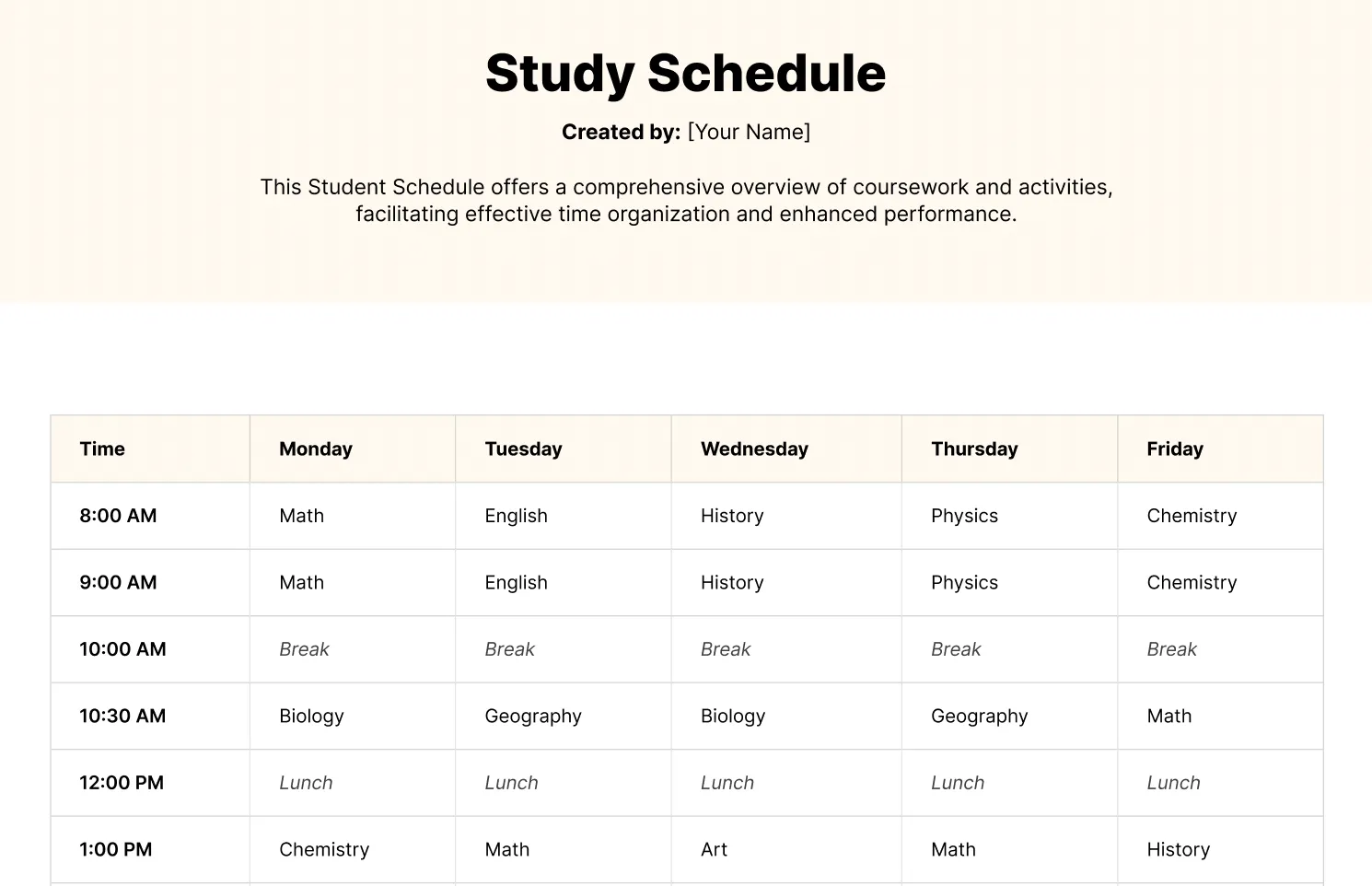
What it is: A study schedule helps students plan courses, revision sessions, and exam preparation. It promotes steady progress toward academic goals without burnout. Students can avoid last-minute cramming and manage their workload more fairly with the help of this scheduling template.
Study schedules often include dedicated blocks for different subjects, reading assignments, practice problems, and review sessions. By spreading study time evenly across weeks rather than concentrating it before exams, students retain information better and reduce stress. These templates can also incorporate breaks and rest periods to maintain focus and prevent fatigue.
Best for: Students preparing for exams, taking intensive courses, or managing long-term learning projects.
When to use it: During exam preparation, intensive study periods, or when balancing multiple academic commitments.
9. Training schedule template
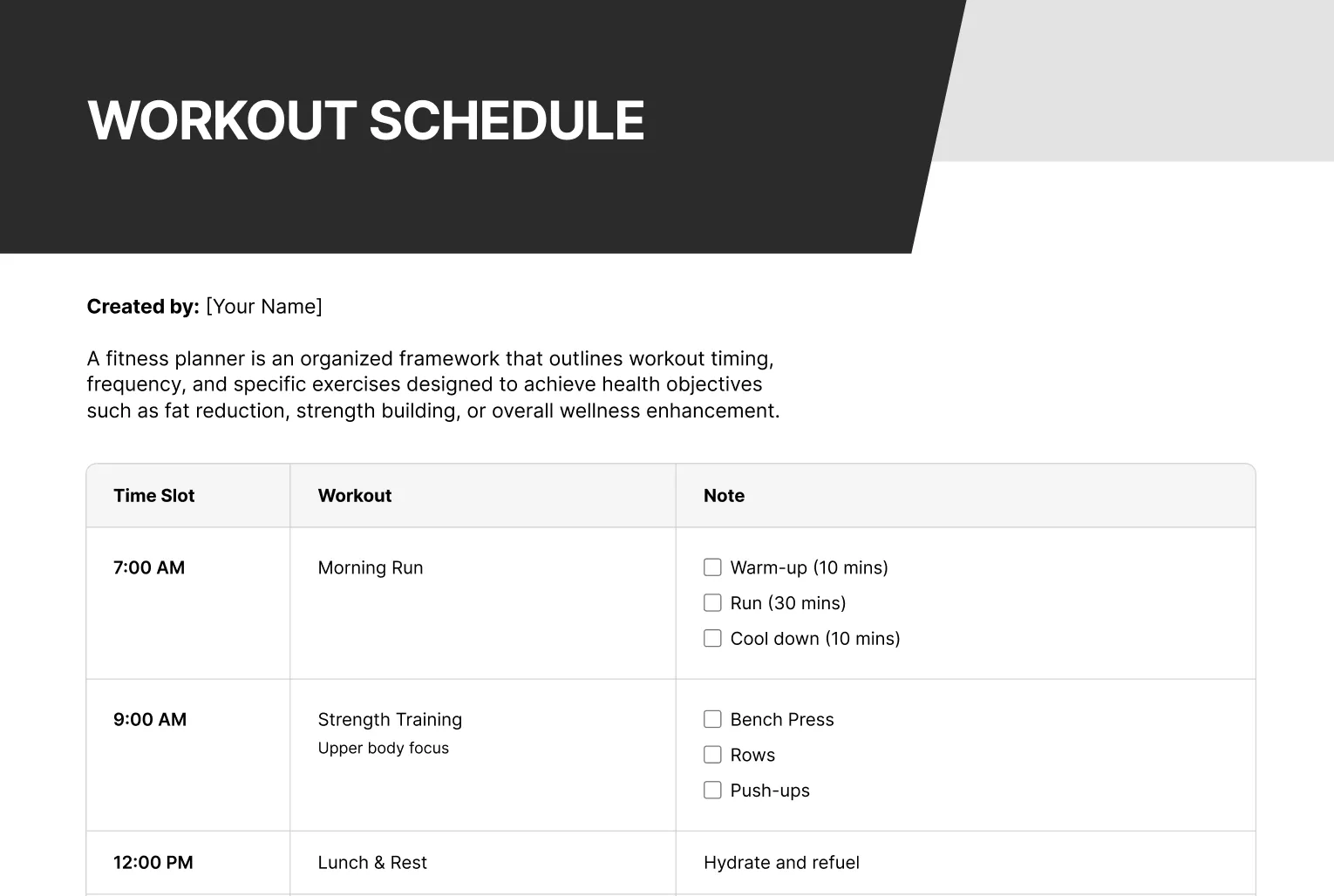
What it is: A training schedule can help organize fitness routines, meal plans, professional development, or skill-building programs. It tracks progress over time and helps you stay consistent by properly arranging sessions or daily tasks. With an editable training schedule template, you can monitor progress, change intensity, and maintain motivation. You can create a specific workout schedule template based on your personal goals and commitments.
Best for: Athletes, coaches, trainers, and anyone following a structured improvement plan.
When to use it: When following a fitness plan, onboarding program, skills development roadmap, or any training that requires consistency and progress tracking.
10. Payment schedule template
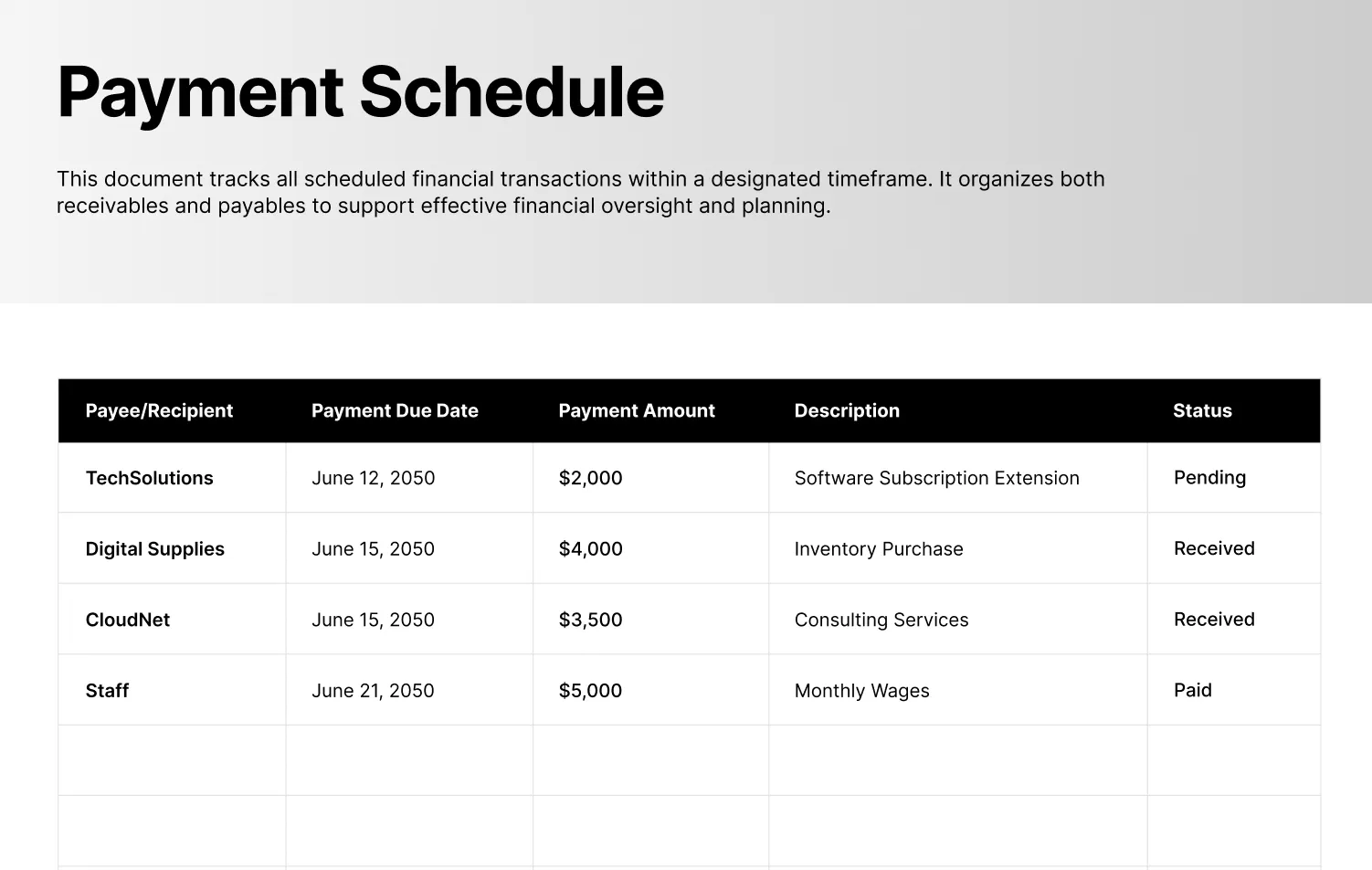
What it is: A payment schedule lists due dates, amounts, and payment frequency in a single, easy-to-understand format. It helps you track financial commitments, improve cash flow visibility, and reduce the risk of missed payments. Payment schedule templates are especially effective when managed online, as they allow for quick updates and adjustments.
These templates can track loan installments, subscription services, vendor payments, client invoicing, or personal bills. By organizing all payment information in one place, you can plan your cash flow and avoid late fees. Many payment schedules also include fields for payment methods, confirmation numbers, and notes about each transaction.
Best for: Individuals and businesses managing installments, subscriptions, or recurring financial obligations.
When to use it: When handling periodic payments, loan installments, or any financial commitments that need organized tracking. This template will help you maintain financial clarity.
How to make a schedule template
The easiest way to create your own custom schedule template is to start with a premade structure and personalize it to fit your needs. Browse our template library to find a schedule format that matches your planning style. Once you open it, you'll have access to editing tools that let you add or remove time blocks, adjust categories, and modify layouts to match your exact requirements.
Here's how you can edit your template:
- Adjust the layout: Resize sections, move elements, or reorganize the structure to suit how you plan.
- Add or edit text: Update labels, headers, time slots, or task categories to match your workflow.
- Customize sections: Add new areas for notes, priorities, or specific tracking needs.
- Change colors: Apply color coding to highlight different types of tasks, days, or priority levels.
- Insert images or logos: Add visual elements that make the template more engaging or brand it for professional use.
After customizing your template, download it as a PDF and reuse it whenever you need to organize your schedule. Customizable premade templates are flexible, saving you time while still giving you full control over the final design.