
You're ready to hit send, but your email bounces back with that familiar warning: "File too large to send." Whether it's a detailed report, a presentation packed with visuals, or a signed contract, large PDFs are a common stumbling block in everyday workflows.
The good news? There are several practical ways to get around email size limits. In this guide, we'll show you how to send large PDF files via email attachments using tools like PDF Guru, explain why these limits exist in the first place, and help you choose the right approach for your situation.
Why is there a limit on email attachment size?
Email providers cap attachment sizes to protect their servers and ensure reliable delivery. Large files strain server resources, slow down transmission, and consume significant storage space. Without these limits, a flood of oversized attachments could clog email systems, causing delays or outright failures for everyone.
PDFs are particularly prone to size issues because they often contain high-resolution images, embedded fonts, and complex formatting. A single multi-page document with graphics can easily exceed typical email limits, especially if it hasn't been optimized for sharing.
What is the max PDF size for email attachments?
PDF documents follow the same attachment limits as any other file format. The exact cap depends on your email provider, and these limits apply to the total size of all attachments combined, not each file individually.
| Gmail | Outlook | Yahoo | iCloud |
|---|---|---|---|
| 25 MB | 20 MB | 25 MB | 20 MB |
Keep in mind that when you send an email to someone using a different provider, the lower limit applies. For example, a 25 MB PDF sent from Gmail won’t reach an Outlook inbox that only allows 20 MB attachments. Also, the Gmail file size limit is 25 MB for attachments. If you need to transfer larger files through Gmail, the system automatically prompts you to upload to Google Drive and share a link instead.
PDF too large to email? Here are 6 things you can do
If your PDF exceeds your email provider's limit, don't worry. You have several options to work around the restriction:
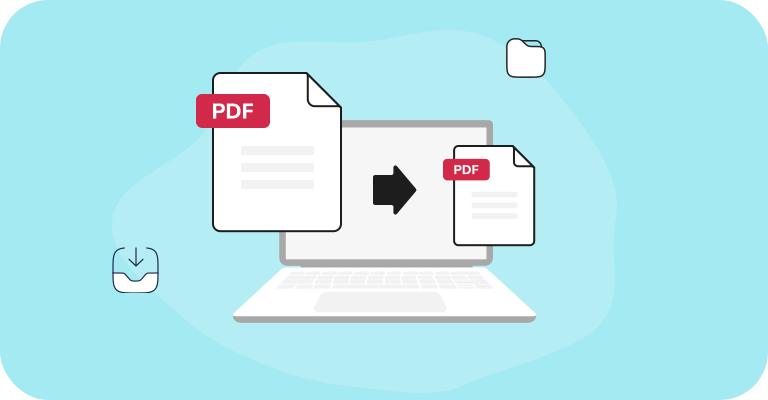
Compress a PDF: reduce the file size by optimizing images and removing unnecessary data.
Zip the file: package it into a compressed archive (.zip) that takes up less space.
Use cloud storage: upload the file to Google Drive, OneDrive, Dropbox, or iCloud and share a download link.
Use file transfer services: platforms like WeTransfer let you share large files directly.
Upload to an FTP server: a more technical option for professional workflows.
Split the PDF: break a large document into smaller parts that fit within limits.
The best method depends on your file size, how quickly you need to send it, and whether your recipient needs the original file or can work with a link. Let's look at each option in detail.
How to compress a PDF to send via email

The best way to compress PDF files is to use an online tool that optimizes images and removes unnecessary data without sacrificing readability. Compression works by reducing image size, eliminating duplicate elements, and streamlining the document’s internal structure. When done properly, a PDF can be reduced by 50–90% while remaining fully readable.
Compressing PDF for email is often the simplest solution because you end up with a single, smaller file that you can attach directly to your email. No links, no extra steps for your recipient.
To compress PDF files online with PDF Guru:
- 1
Open the Compress PDF tool and upload your file.
- 2
Wait a few seconds while the tool processes your document.
- 3
Download the compressed PDF, now ready to attach to your email.
The compression algorithm targets image resolution and embedded resources, which are typically the biggest contributors to file size. Text and vector graphics compress efficiently, so documents with lots of images see the most dramatic reductions.
How to zip a PDF file for email
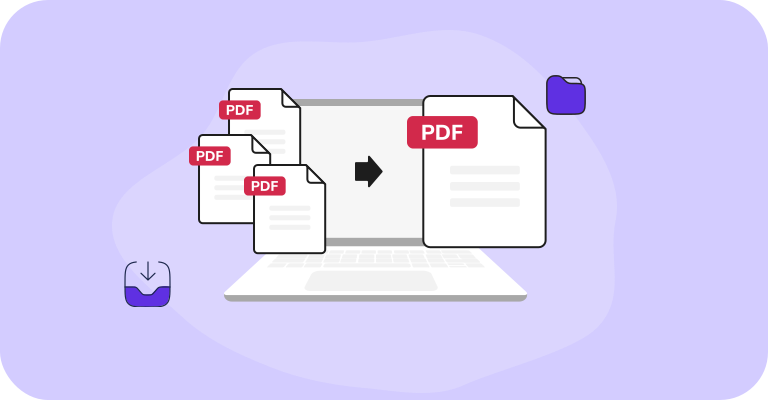
Zipping creates a compressed archive that packages one or more files into a single .zip file. Unlike PDF compression, which optimizes the document itself, zipping uses lossless compression on the file as a whole. This makes it especially useful when you need to send multiple PDFs together or when you want an extra layer of size reduction on top of an already-compressed PDF.
Both Windows and Mac have built-in tools for creating zip files, so you don't need any additional software.
How to zip a PDF file on Windows
- 1
Locate your PDF file in File Explorer.
- 2
Right-click the file and select Compress to ZIP file (Windows 11) or Send to > Compressed (zipped) folder (Windows 10).
- 3
A new .zip file appears in the same folder, ready to attach to your email.
To zip multiple files, select them all (hold Ctrl while clicking), then right-click and follow the same steps.
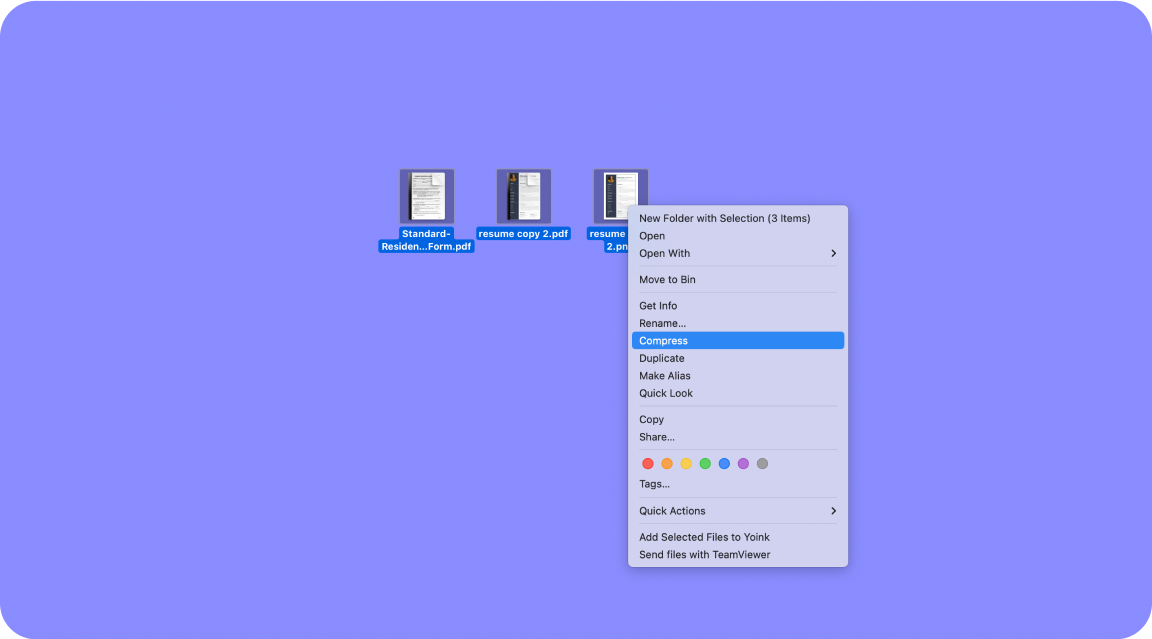
How to zip a PDF file on Mac
- 1
Find your PDF in Finder.
- 2
Right-click (or Control-click) the file and select Compress.
- 3
A .zip file with the same name appears in the same location.
For multiple files, select them all first (hold Command while clicking), then right-click and choose Compress.
How to email large PDF files using cloud storage services
Cloud storage lets you bypass attachment limits entirely. Instead of attaching the file directly, you upload it to a cloud service and share the link. Your recipient clicks the link to view or download the file.
This approach works well for files of any size, and most people already have access to at least one cloud service through their email account. The main consideration is permissions: you'll need to make sure your recipient can access the file, either by making it viewable to anyone with the link or by granting specific access to their email address.
Google Drive
- 1
Open Gmail and click Compose.
- 2
Click the Google Drive icon at the bottom of the message window.
- 3
Select your PDF from your Drive, or upload it using the Upload tab.
- 4
Choose Drive link and click Insert.
- 5
Gmail will prompt you to adjust sharing settings if needed before sending.
OneDrive
- 1
Go to onedrive.com and sign in with your Microsoft account.
- 2
Upload your PDF by clicking Upload or dragging the file into the window.
- 3
Right-click the uploaded file and select Share.
- 4
Choose Copy link or enter your recipient's email to send directly.
- 5
Paste the link into your email if you copied it.
Dropbox
- 1
Open dropbox.com and sign in.
- 2
Upload your PDF using the Upload button.
- 3
Hover over the file and click Share.
- 4
Click Create link, then copy and paste it into your email.
iCloud Drive
- 1
Go to icloud.com and sign in with your Apple ID.
- 2
Open Drive and upload your PDF.
- 3
Select the file and click the Share button.
- 4
Choose Share with iCloud, adjust access settings, and copy the link to include in your email.
How to send large PDF files using file transfer services
File transfer services are purpose-built to send large files. You upload your PDF, and the service generates a download link that you can share via email. These platforms often support much larger files than cloud storage free tiers and don't require the recipient to have an account.
Several options are worth considering:
WeTransfer: send up to 2 GB free, with links that expire after 7 days.
Send Anywhere: works across all platforms and generates a 6-digit code for quick transfers.
Filemail: free for files up to 5 GB, with no registration required.
The trade-off is that download links typically expire after a set period, so these services work best for one-time transfers rather than files you need to access repeatedly.
How to upload PDF files to FTP servers
FTP (File Transfer Protocol) is a standard method for transferring files between computers over a network. It's a more technical solution typically used in professional environments where an organization maintains its own file server or uses services like Amazon S3.
With FTP, you upload your PDF to a server and then share the download URL with your recipient. This approach gives you complete control over storage, access permissions, and file retention. It's particularly useful for teams that regularly exchange large files and need a centralized, reliable system.
You'll need FTP client software (such as FileZilla or Cyberduck) and server credentials to get started. If your organization has an IT department, they can provide access details and guide you through the setup.
How to split PDF into multiple files for easier sharing
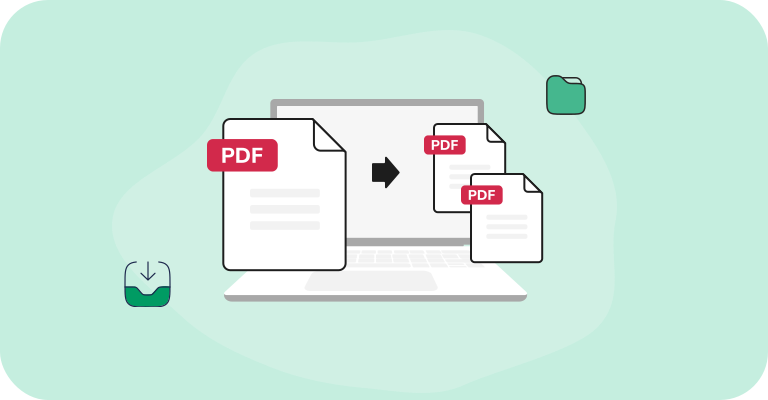
When compression isn't enough, splitting a large PDF into smaller parts lets you send each section as a separate attachment. This works well for multi-chapter reports, long contracts, or any document where the recipient can work with individual sections.
To split PDF files with PDF Guru:
Open the Split PDF tool and upload your document.
Choose how to divide the file: by page range, into equal parts, or extract specific pages.
Click Split and download the resulting files.
Attach each part to your email, or send them in separate messages if needed.
After your recipient downloads all parts, they can merge PDF files back together if they need a single document.
Video Tutorial: How to Compress a PDF Online Without Quality Loss
Best practices for sending large files
Whatever method you choose, a few habits will make the process smoother for you and your recipients:
Compress before uploading. Even when you upload large files to cloud storage or transfer services, compressed files upload and download faster.
Name files clearly. Use descriptive names like "Q4-Report-Final.pdf" rather than "Document1.pdf" so recipients know what they're downloading.
Check sharing permissions. Before sending a cloud link, verify that your recipient can actually access the file.
Set expiration dates. For sensitive documents, use links that expire after a reasonable period to limit exposure.
Add context in your email. Let recipients know what they're downloading, especially if you're splitting files across multiple messages.
Scan for viruses. Run a quick security check before sending, particularly if the file came from another source.
For documents that need signatures, you can also sign PDF files before sending.
Need to work with other formats? PDF Guru also lets you convert PDFs to and from various file types, making it easy to prepare documents however your workflow requires.